
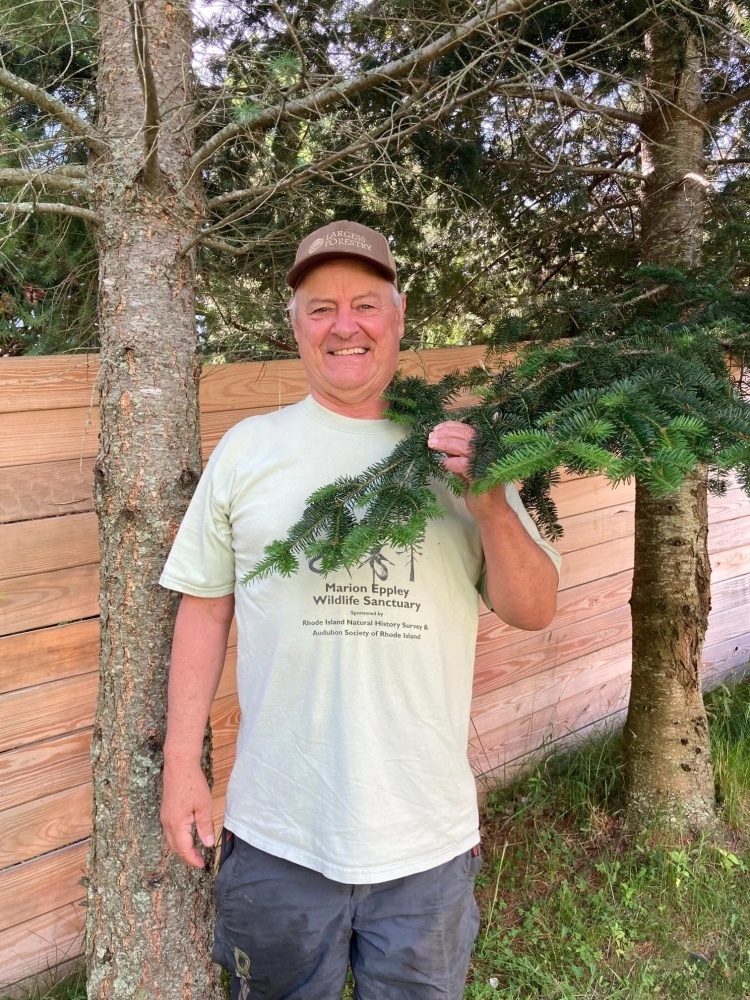
Matthew Largess is an arborist and old-growth forest enthusiast in Jamestown, Rhode Island. He studied forestry at Paul Smith’s College in the mid-1970s before leaving to work as a logger. After a decade working in the woods of California, Oregon, and Maine, Matthew returned home to Rhode Island. He started Largess Forestry 40 years ago, specializing in tree care and preservation. Outside of work he is an avid sailor.
I grew up in Jamestown, Rhode Island, on an island across from Newport on Narragansett Bay. I fell in love with working in the forest at a very young age. When I was a kid, I was hired by a lady who owned a farm and a marsh to clear out her forest. With a bunch of other kids, we did thinning all summer there, mostly with handsaws, not chainsaws. At the end of the summer, I took a trip to the mountains of Pennsylvania with another family. I had never been to the mountains. It was so different than the coastal forests of Rhode Island, the red maple marshes. It was all hemlocks and white pines. I fell in love with it. I went trout fishing, and it was a moment I’ll never forget. I had all these moments of knowing I was connected to the forest.
I was kind of a troubled kid and I hated being inside. In high school, I couldn’t sit still. I went to Paul Smith’s College because I knew I wanted to be in the forest. I was an alcoholic and I didn’t really pay attention in class, even though I had these incredible professors, some of the best that ever lived – people like Michael Kudish. And William Harlow, the dendrologist, came from Syracuse once. I majored in forestry, and I was on the woodsmen team, and I hiked all the peaks and became a 46er, but I was also drunk all the time, and I didn’t finish. I regret not getting more from the experience. I left in 1975.
After college I went out west with my best friend Pete, and we became loggers. We were in Oregon and California. It was the beginning of helicopter logging then, where they were logging old-growth forests off of mountains where there were no roads. I was a choker setter, so I would wrap the metal cables on the logs after they were cut by the timber fellers. It was 24 hours a day. They were helicopter logging in the evenings. The spotted owl thing was coming out and so they were working fast; old growth was going to be shut down. We would have to stop our trucks because of the protesting. Every day was so scary and so exciting. Logging is one of the most dangerous jobs in the world, and then there were also bears and wolverines and people protesting like crazy out there. I was just a young kid. I fell off a log once and almost lost my eye – I felt lucky to be alive. I was out west for around 8 years before I got a job in Maine.
I worked in the logging camps – doing pulpwood – up near Moosehead Lake in Greenville. They don’t have those like they used to. We would log in the winter because the swamps froze, and it’d be 20 below out there. It was something. I did that for a few years where I’d be up there in the winter and back in Jamestown otherwise. My alcoholism was getting worse and worse, and I finally quit logging.
I worked at a shipyard in Middletown, Rhode Island. I was a sailor my whole life, too, so I ended up on a sailboat. One day this lady called me up and said, “I’ve got a tree to take down, can you do it?” I realized then that I could make more money as an arborist in a day than I could in a week or two of logging. I ended up going to rehab for a month. I’ve been sober for 41 years now. After the first year of being sober, I put all my energy into becoming an arborist. Learning about trees and being with trees has healed me. I learned about the International Society of Arboriculture and started reading and started climbing more trees and realized I was really good at it.
I bought a business in Newport in 1986, and now I’ve been running Largess Forestry for 40 years. I had one truck and one employee starting out. My first day I made 300 bucks and I thought, “Wow!” Now I have 10 trucks and 12 employees and we consult nationwide. I’ve got a great team. The business is great, we’ve got great equipment, but if you don’t have the people to run it, what do you have, you know?
Most of our work now is in restoration and preservation – not taking down trees. I do a lot of education about the importance of trees. I found out the money is not in removals but in helping people save their trees. I climb and take off dead wood, fertilize, inject trees – all kinds of programs to keep trees alive. It became our niche. I was hired as a consulting arborist to help people save their redwoods after the Palisades Fire in California recently. I got hired by someone in Maine who just bought a lot of land on the Penobscot River. And sometimes I get hired by insurance carriers to go to Florida or Texas or wherever to do appraisals of trees on golf courses and resorts. I go all over and do all kinds of things.
The turning point in my career was when I got hired to cut Oakland Forest, which is the oldest American beech coastal forest in New England. I was like, “I can’t cut this down.” I was thinking about how it was this final climax stage of this forest. There was only 20 acres left. It was on this Vanderbilt estate in Newport that they had never logged because they were so rich. They just ran their hunting dogs in the woods there. I ended up battling to save it and eventually Aquidneck Land Trust got involved, and this billionaire put down the money in 2000. In 2010, Shamus Flaherty wrote a book about it and about my life called Treehugger.

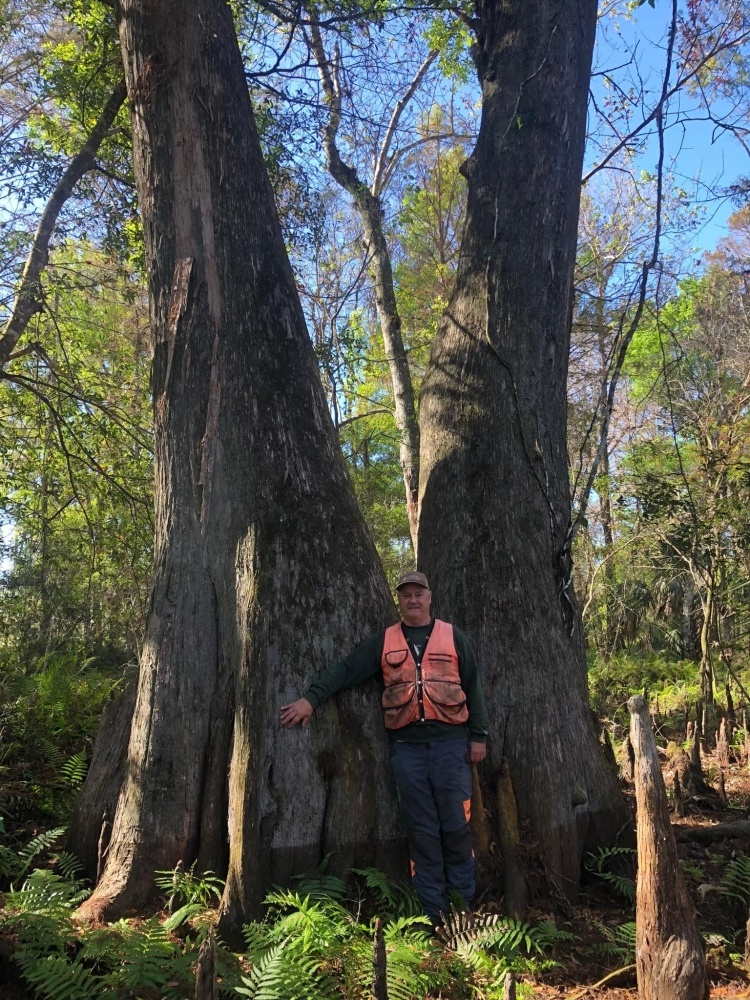
I got hooked searching for more old growth and giant wolf trees. I helped protect Saddler’s Woods in New Jersey. I found a 35-foot diameter bald cypress at Arbuckle Creek in Florida, and I found an old, beat-up red oak in Rhode Island that was 28 feet around. It was a chimney tree, the kind where you can walk inside because it’s so old and big. Now I’m connected with the Old-Growth Forest Network. I feel like I found my path. I feel like my life is on fire. There’s more excitement about trees now. A lot has changed since the pandemic. I’ve been leading tree walks for a while, and before the pandemic, we could turn out maybe 25 people, but a few years ago I led one in Keney Park in Hartford, Connecticut, and 360 people showed up. People got back into the forest and started to work in their yards again during the pandemic.
I work with trees all day, and at night I study as much as I can. I’ll read any journal; I’ll read about any kind of insect. I’m working with the entomology department at Virginia Tech, trying to figure out what to do about beech leaf disease. I’m excited about the Mauget tree injections. As a recovering alcoholic, I can have such a focus when I get into something – I go all in.
Things are good: I’m in recovery, I’m 71 and still alive, I’m in Rhode Island, I’m being interviewed for this. Right now, I’m looking at an English oak that I worked on 20 years ago, and I’ll probably work on it again if the ice storm that’s coming is bad. My life is so great. The most meaningful part of the work for me is the ancient trees. The sacredness of ancient trees and protecting places, and also, the connection between people and trees. People call me to their yards because of how connected they are with their trees – some of them don’t realize how much they are connected until something happens to their trees. For me, it’s really all about the trees and being a voice for them.
Discussion *