
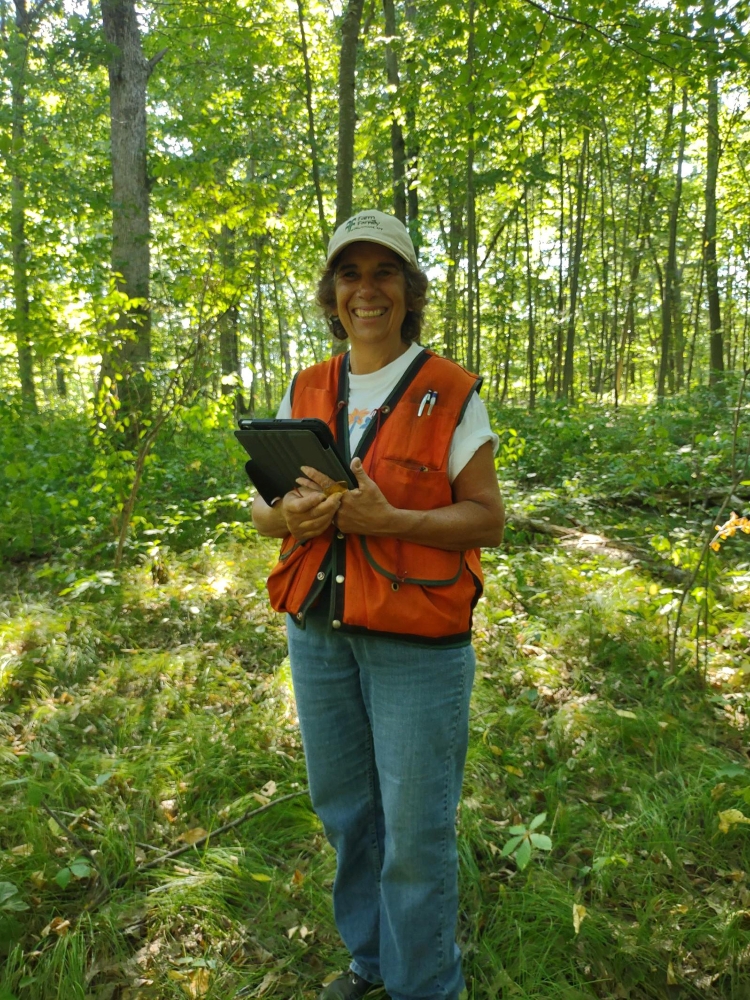
Joan Nichols is a consulting forester who has been working in Connecticut since 1983. Originally from New York City, Nichols graduated from SUNY-ESF with a degree in forest resources management and worked in Montana before returning to the East Coast. Nichols works with land trusts, municipalities, and private landowners. When she’s not in the woods, Nichols enjoys kayaking, hiking, and drawing.
I was born and raised in Queens, New York. I’m a product of Italian immigrants, and Queens is as far as they got. I was a city mouse who found more joy in the country. My dad was a wonderful, “have gas, will travel”–type of father, and he loved exploring the United States on car trips. When we weren’t doing these crazy-long, cross-country car trips, we would just go someplace for him to get out of the city and relax for a few weeks. It was usually either the mountains of western Maine in the Rangeley Lakes area or the Adirondacks of upstate New York. Once when I was 14 or 15, we were on a gravel road in western Maine looking for a waterfall, and we pulled over at a Maine Forest Service cabin. This really cool ranger came out and gave us directions. He had a four-wheel-drive truck, and he was wearing the uniform. I remember saying from the back seat, “That’s what I want to do.”
My parents were very educationally focused. They thought education was the avenue to advancement. I really liked plants and gardening and thought about studying horticulture, but the woods were really calling to me. I got a bachelor’s in forest resources management at SUNY-ESF. I really liked Dr. Ralph Nyland who taught silviculture, and Dr. Peter Black, who taught hydrology classes. I was on the timber sports team for four years and involved in student council.
After my junior year, I got an internship with the US Forest Service and went to work as a district recreation guard in Lolo National Forest in western Montana. I had a couple of roadside campgrounds and a boat launch that I took care of, and I did some trail inventory and maintenance. And lo and behold, I got my Forest Service uniform, and an F-150 pickup!
When I graduated in 1981, employment prospects were looking dismal. It was the first year in the school’s history that International Paper didn’t come interview graduating students on campus. All the positions were filled. My career path in college led me towards the forest products industry. I realized there were going to be more job opportunities in the private sector if I lean towards the forest products, because then I could not only work on state and federal land as a forester, but I also could be employed in the private sector, in sawmills, in pulp mills, or on industrial land. When I left the Plains Ranger District in Montana, I told them I wanted to come back for large-volume timber sales. They hired me back on a nine-month appointment, so I went back to the Lolo National Forest. We had a blast. I was the only woman on the 5- or 6-man timber sale crew. I would have stayed out west working nine-month appointments, but I was really seeking full-time forestry work.
I got hired as a full-time forest technician by Rossi Corporation, a sawmill in Connecticut. They’re still around, and are now called Scotland Hardwoods. I got promoted to a forester role, and then did procurement forestry for the mill for more than 7 years. In 1990, I left the mill and married my now ex-husband, who was a logger at the time, and we started our own forestry and logging company. For 27 years, I bought timber and did forest management, and we did our own logging. We weren’t high production, but we were very conscientious, and he was a very good logger.
In 2008, I also started working as a technical service provider for the NRCS, to help implement the USDA’s Environmental Quality Incentive Program, which the farm bill funds to help landowners with forest management plans. I’ve been doing that ever since. There’s a number of different stages to help landowners, whether it’s doing invasive plant control or creating wildlife habitat or doing forest stand improvement. Forestry is an art as much as it is a science, and, I’ll admit, not everything is a success. But you get to see how the forest evolves.
When we divorced in 2016, I divested myself of the logging equipment and just kept doing private consulting forestry. Most of my work is in eastern Connecticut because that’s where I live. I just picked up a cool project in Exeter, Rhode Island, on 2,300 acres over there, but a lot of owners have small acreages. I’m happy to accommodate anybody interested in forestry and learning about their woods. I have some land trust and municipal clients, as well as private forestland owners. I’ve been doing this since 1983 in the same geographical area, so I say I’m from the Jurassic period. I’ve been marking a timber sale on a parcel of privately owned forestland that I first started managing decades ago. I took a photo of the beautiful red oaks and said, “I’ve been watching these oaks grows for almost 38 years.”
I’ve never seen so many simultaneous pressures on our forests before. It used to be that there would be an outbreak of hemlock woolly adelgid, or spongy moth, and I’d lose a bunch of trees, but I’d deal with it. Now I go out in a woodlot, and I might have emerald ash borer, spongy moth, beech leaf and beech bark disease, and if there aren’t invasives right there, they’re right over the stone wall. There’s a lot of forest health problems all at once.
Another thing is that we have lost so much of our markets, especially low-grade. Since the beginning of my career, the number of mills that have closed not only in Connecticut, but in our region, is astonishing. We don’t have a low-grade market. There’s a firewood market, but it can only absorb so much. We don’t have a local pulp market. We need some utilization for woody biomass, whether it’s energy or biochar or added value. Merchantable sales have a lot of market volatility. It used to be that I could look at a woodlot and do an inventory and, with a reasonable amount of confidence, tell a landowner what the value of their timber is, even if we didn’t cut it for another six or eight months because of operability. Now that’s gone.
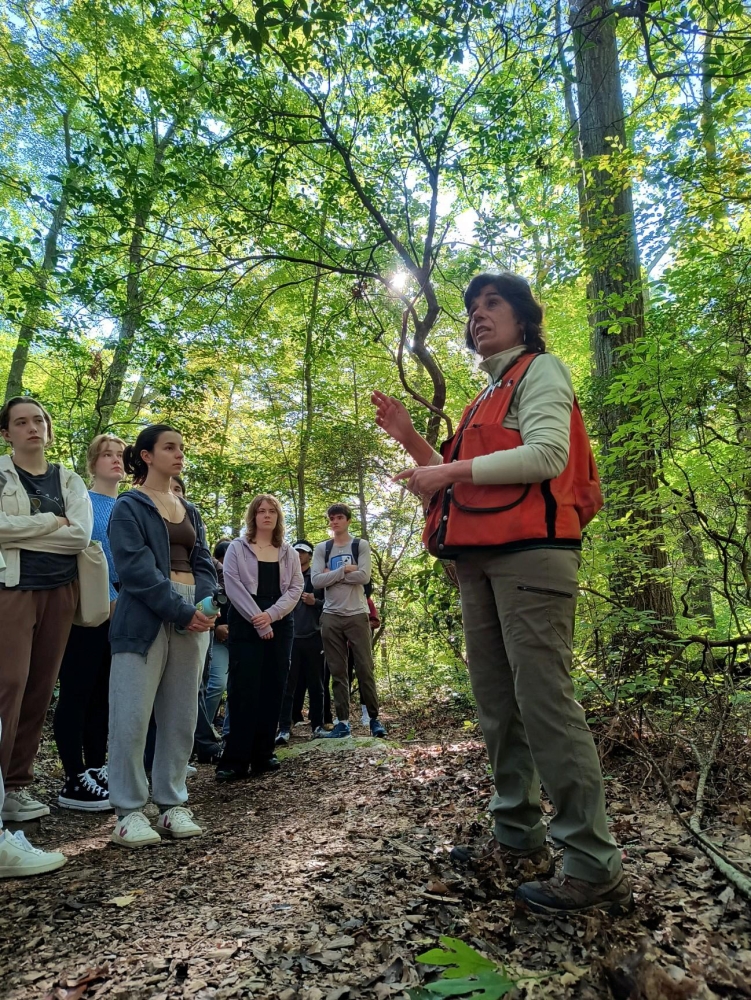
I love the education side of my work. I sometimes educate landowners and they decide to go with someone else or not to do the project, but I always feel that it was worth it. I always want to take a team approach to things and explain enough that the landowners understand it. I write a very narrative management plan; I could throw in a bunch of data and technical jargon, but why? I always tell people, “It’s your plan, not mine. I want you to be able to pick it up in five years and have it still make sense to you.”
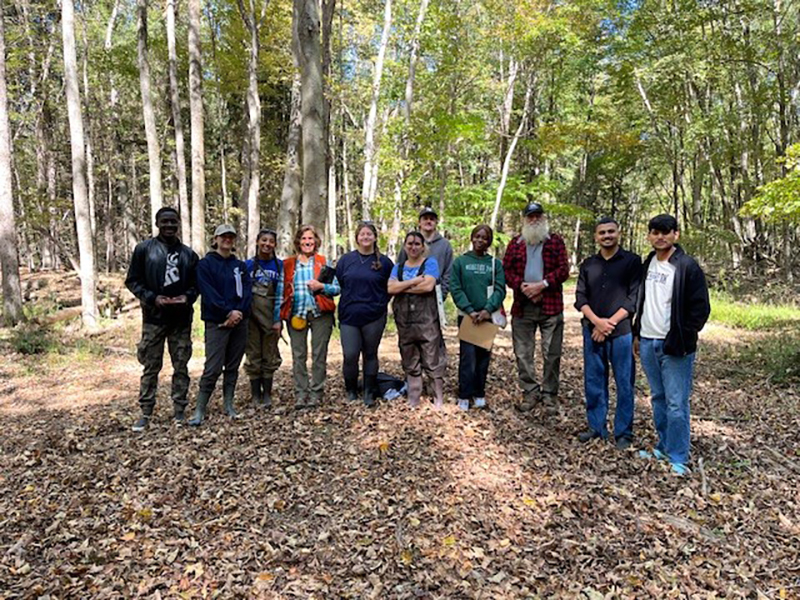
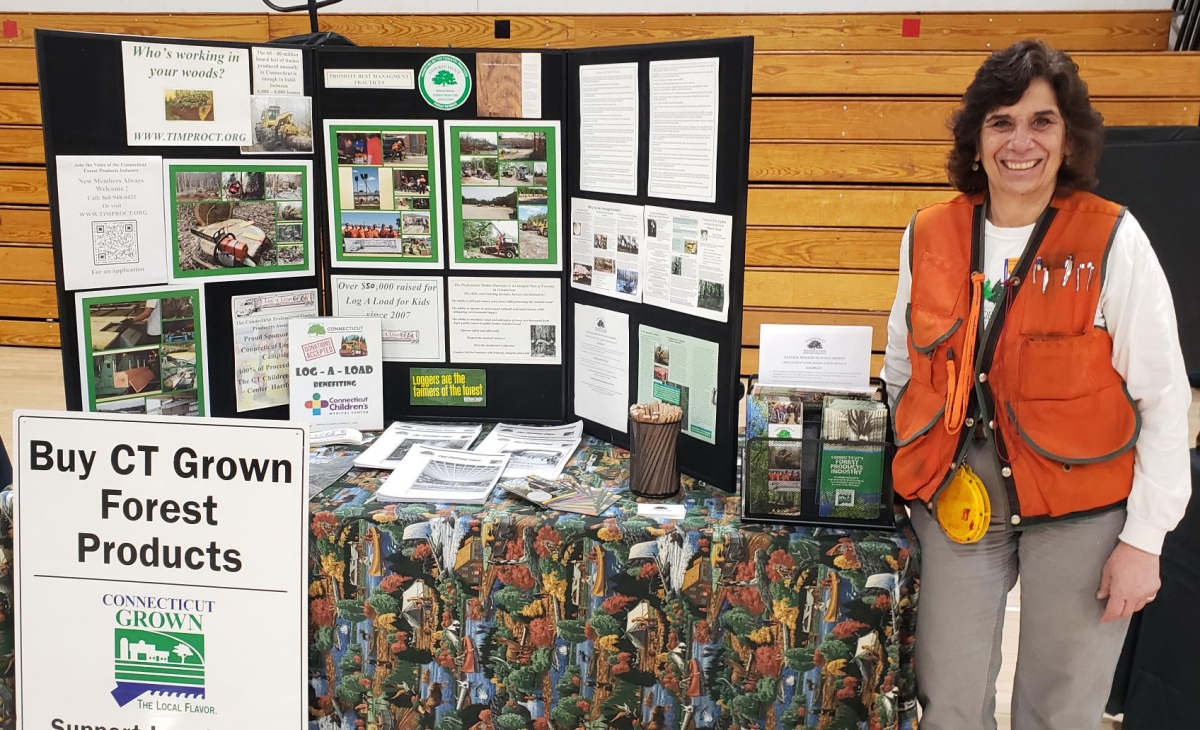
I was the founding president for Connecticut Professional Timber Producers Association. I’m still on the board and do the outreach program there. Any school group from elementary to high school can ask us to come talk, and we do career fairs. Sometimes we go speak at universities. I’m also on the board for Connecticut Agricultural Experiment Station and Northeastern Loggers Association, and we take kids out on the expo floor and show them equipment at the Loggers Expo. Connecticut is no longer an agrarian or timber state. We’re getting further away from working lands, and less people are going into forestry and logging, which makes education more important.
I can get disconcerted that I don’t see that many people getting into what I call “boots-on-the-ground forestry.” It’s hard because the cost of living is very high in southern New England. I feel that foresters are undervalued and there is such a dire need for people who understand forest health and forest dynamics. We need people to help with all the current and future pathogens. Sometimes I feel like we have a gray tsunami going on here, with me and all of my colleagues getting older, and younger students moving away from that work. But then when I went to the SAF National Convention in Hartford this past fall, it really gave me hope. They had the most students ever that year. I think it’s really important to continue to inspire and encourage the next generation of foresters.
Discussion *