

Brandon Wilson Radcliffe is an environmental educator and ecologist in Baltimore, Maryland. He is an instructor in the Urban Silviculture Training Program, an urban forestry and tree management training program created by Stillmeadow Community Fellowship and the U.S. Forest Service. He also works at Parks & People Foundation, a non-profit focused on revitalizing green spaces around Baltimore and improving access to them.
I grew up in Co-op City, which is in the northeast area of the Bronx in New York, right before you hit the Long Island Sound. My mom is an avid plant person and orchid collector, so growing up, there were quite literally dozens upon dozens of plants in our house. I also helped my grandmother with her garden. And we were near Pelham Bay Park, which is the largest park in New York City, and I spent a lot of time there.
For high school, I went to the Lawrenceville School in New Jersey, which is a boarding school. The whole campus is an arboretum. When I just needed to be an angsty high schooler, I would go off into the woods. It was a harsh transition from going to school in the Bronx to then going to this predominantly white institution and being one of the few Black students there. It felt very isolating, and I found solace in nature.
I went to Skidmore in 2016 and majored in environmental science with a minor in education. I liked being in the woods and working on sampling lakes and streams. I worked as the Northwoods steward – the name of the woods on campus – and would walk the trails and monitor them and host regular cleanups and hiking events. When I was on spring break doing soil sampling with a professor, Covid shut everything down, and so I finished my senior year of undergrad from home.
I was pretty set on either doing environmental work or being an educator. A lot of funding was frozen in the city for a lot of the environmental positions, but schools are always hiring, and I was trained and certified as a teacher. I ended up working as a 7th-grade chemistry and physics teacher. Nothing can really prepare you for having to teach chemistry to 30 kids who are between the ages of 11 and 13 on Zoom. I did it for a year, but I couldn’t see myself doing that for the rest of my 20s.
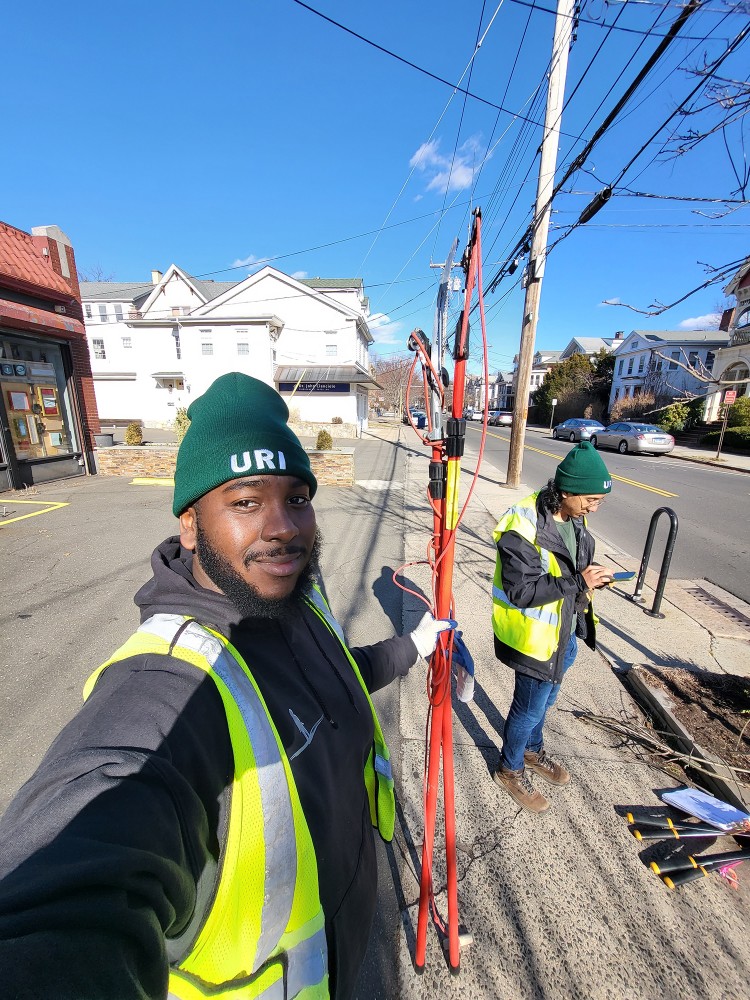
I got a job at Wave Hill Public Garden and Cultural Center in the Bronx as a forest project crew leader. It was a position leading high school students and teaching them over the summer, everything from basic environmental science to how to do trail and park restoration and maintenance. We removed invasive species like garlic mustard, bittersweet, porcelain berry, and knotweed. It got them acquainted with what working outside can often be like. It also connected them with local researchers, because they had an opportunity to help out with collecting data for researchers throughout the New York City metro area who study environmental science or forestry. It was a big change to be in person and I much preferred that. I liked being able to see when someone didn’t understand something and being able to change my approach in explaining it to them in real time. It was also great to be able to touch the thing you’re learning about and interact with it; if we were talking about erosion, I could walk them down the side of a slope to look at it, or if we were talking about invasive species encroachment on forest edges, we could go and see that transition where invasive species are able to enter forest patches.
They didn’t have funding to keep me through fall, but I had been calling and reaching out to professors and researchers who might have work. I ended up connecting with Dr. Sarah Batterman, at the Cary Institute of Ecological Studies in Millbrook, New York. The postdoc in her lab, Dr. Michelle Wong, needed help harvesting and processing a whole lot of plants, and they were able to provide me housing for the three weeks it would take to do that. I loved working in the greenhouse and getting to know their research on nutrient cycling and nitrogen fixation in response to climate change in wide array of temperate growing plants.

Dr. Batterman connected me with Dr. Duncan Menge and Dr. Kevin Griffin in Columbia’s Ecology, Evolution and Environmental Biology department. I got a job in their lab, doing similar research growing plants and looking at nodules, but this time with the added step of running gas chamber experiments on them. At Wave Hill, I had gotten so used to being outside regardless of temperature or weather; in the lab, I worked inside and for the first few months, I wouldn’t see anyone until I left and got on the bus after work. The lab work scratched a different itch of working with plants, but in a very controlled setting. I still got to be curious and also hands-on in a way that felt productive to me.
I wanted to go to graduate school and I got into the forestry program at Yale. In New Haven, I got really into urban ecology and worked at the Urban Resources Initiative, which is the primary tree planter for New Haven. I was out there every Saturday, planting trees with high school students. Professor Morgan Grove, who taught my urban ecology class, used to work as the director of the U.S. Forest Service’s Baltimore Field Station and connected me to the Urban Silviculture Training Program, a pilot program he was starting there for workforce training in urban forestry. I went down to Baltimore after my first year of grad school to run it.
I came back to New Haven after my summer there and wrote my senior paper on the benefits and flaws of the urban silviculture program, and what should be potentially changed to keep it going in the future. I graduated in 2024 and then moved down to Baltimore in 2025 to return to the program in its third year. I wrapped up the training in November, and now we’re beginning to plan for the fourth year. The program is for anyone over the age of 18, and we normally have four to six students at a time. Instruction ranges from basic street tree care to trail maintenance to how to install water bars. We cover planting and pruning street trees. The students interact with academics and also organizations like Blue Water Baltimore, Baltimore Green Space, and Baltimore Tree Trust; we want students to see what all of the environmental career options are. It’s a lot of workforce and professional development through the lens of urban forestry. Some people won’t pursue a career in forestry or horticulture, but it’s still a space for them to safely and effectively develop a lot of skills that they can carry to another place of employment, even if it doesn’t involve trees or plants.
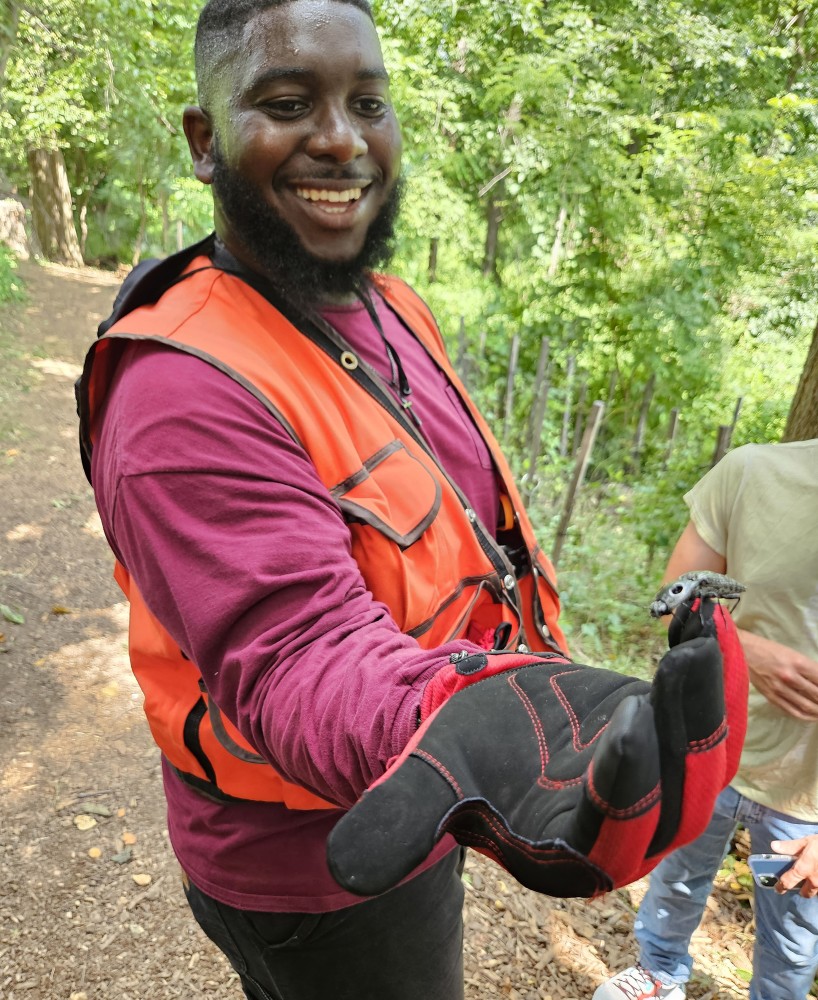
Baltimore Field Station’s primary partner in the Urban Silviculture Training Program is a church called the Stillmeadow Community Fellowship. It’s in southwest Baltimore, and it has a 10-acre forest and peace park that I manage; it’s where I work every day. Most of the programming happens here, and then I also help out with the early childhood afterschool education. I split my time between working at Stillmeadow and Parks and People Foundation. I work with the Branches internship program there, which is a paid afterschool program for high school students centered in environmental education. Students interview to be a part of it and then get paid to be a part of it for a semester or longer if they choose. A lot of it is environmental science, with learning life skills, too. For example, M&T Bank comes and talks about managing personal finances. Students go to University of Maryland’s aquarium and Cylburn Arboretum and get exposure to all these places around Baltimore that they might not see otherwise. It makes me think of my experience with Wave Hill, where students were like, “I’ve lived here my whole life and I didn’t know this was here.”
The most challenging thing has been the uncertainty in the work due to a very hostile political climate. A lot of organizations are losing funding or fully shutting down large portions of their programs that are in this intersection of environmental work and equity and inclusion work. A lot of the grants come directly from the U.S. government, and now we can’t talk about race inequality or green space access in them when that is the primary reason we are asking for that funding.
The thing that gives me hope is working with students and communities and seeing the value and worth in it – seeing how someone can come in apprehensive and after feel like, “Oh, this is what I want to do with my life.” Over the summer I had this 7-year-old student in camp at Stillmeadow who was wildly apprehensive of being outside and engaging with bugs. And after a few weeks, he’s catching bugs and crying when he’s told he can’t bring a praying mantis into the church. At the end of the summer, we went to the National History Museum in D.C., and we got to engage with some of the researchers there. They were using the terms insect, bug, and arachnid interchangeably, and he was like, “No, you can’t do that.” It was a proud moment that he felt like he could correct them about terminology.
Growing up I didn’t see a lot of Black people in environmental spaces. Working with Stillmeadow and Branches, the audiences that I reach are predominantly Black and non-white. Getting these groups more engaged with the nature around them is a large part of why I get up every day and continue doing the work that I do. Baltimore has Lincoln Park, which is the largest urban forest on this side of the country, and yet a lot of people don’t know about it or don’t go there due to historical fear. There’s this idea that it’s really more for white people who like to go hiking. There are people who – for their entire lives, or even generations – have been disconnected from not only this place, but all of the nature around them. Getting Black people engaged with the environment is something that I value a lot.
Discussion *