

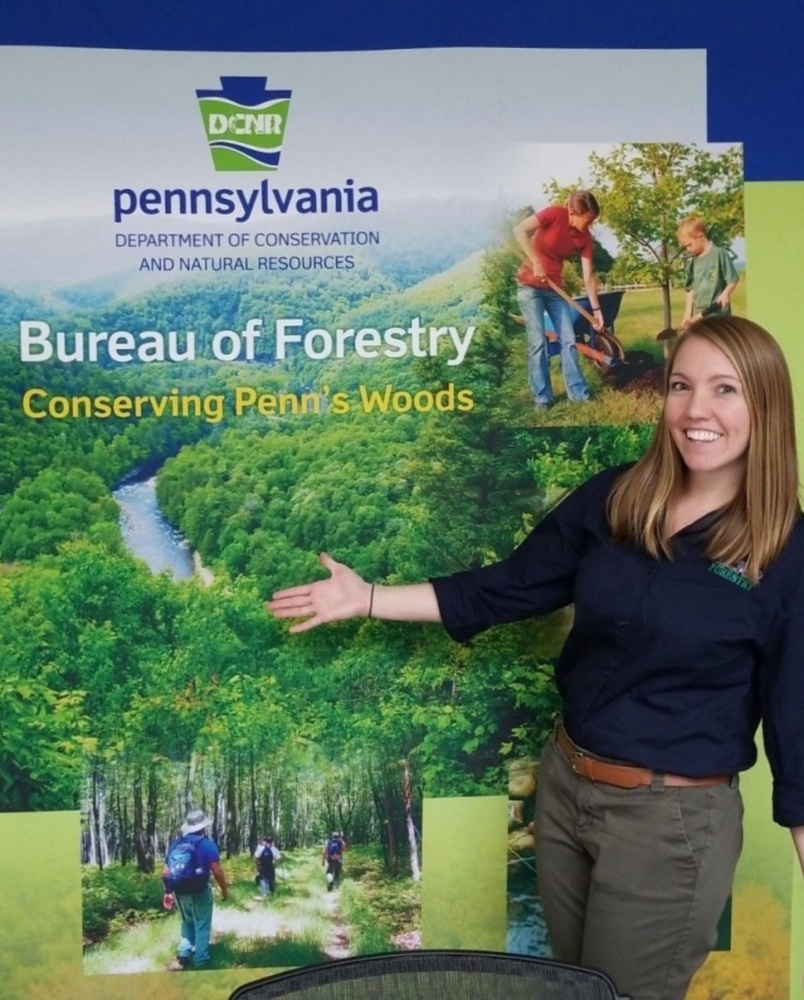
Jessica Pierce is a service forester at Pennsylvania Department of Conservation and Natural Resources in the Bureau of Forestry. She has been with the Department for 14 years and has worked across three forest regions of the state. In her current role, she supports landowners, municipalities, and other organizations in Beaver and Butler counties. When she is not walking in the woods or talking about trees, Jessica enjoys gardening and spending time with her family and friends. She lives in western Pennsylvania with her husband and two young daughters.
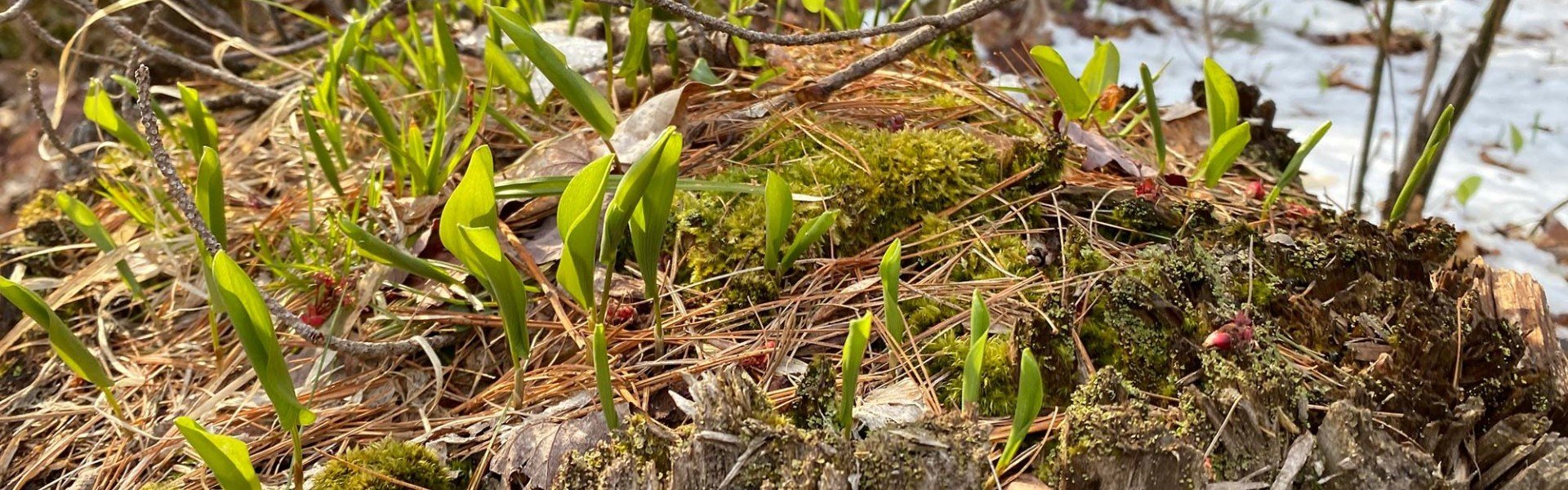
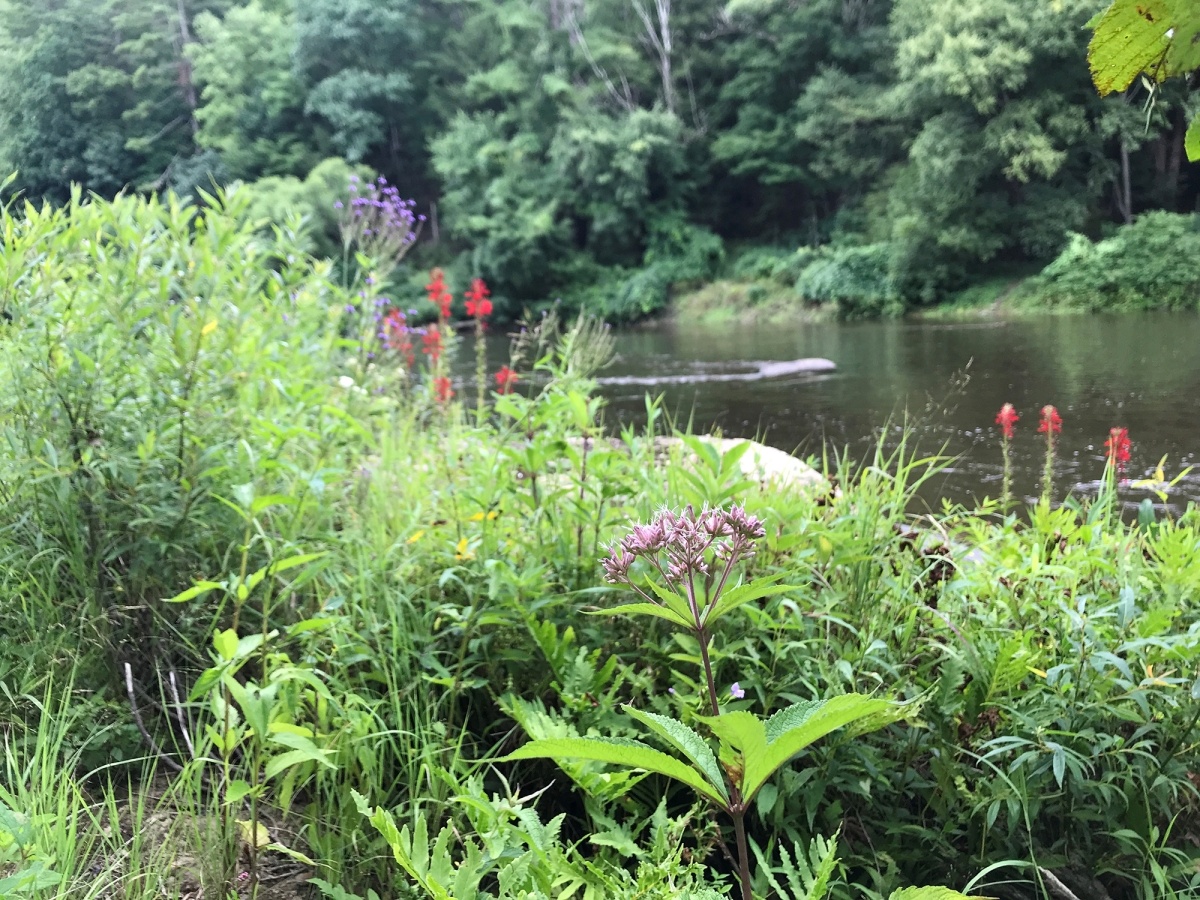
I grew up on 60 acres in Butler County, about an hour north of Pittsburgh. When I was growing up it was pretty rural, now it’s a little more suburban. I loved exploring the woods behind my house with my brother and our friends. We grew up hauling firewood from the woods and hunting in the fall. I was lucky to have parents that really immersed me in the outdoors. We spent a few weekends every year canoeing on and camping along the Clarion River in northwestern Pennsylvania. It’s not far, but it feels like a world away. We explored the same state forest I get to work in today. I didn’t realize it until later, but spending time in two distinctly different forest types, oak-hickory at home and hemlock-yellow birch at the river, gave me an early appreciation for the complexity of forest ecosystems and really shaped the way I care for the wild places we have in Pennsylvania.
I really liked science growing up – especially biology and the natural sciences. After high school, I went to Penn State. I started in environmental resource management and then switched to forest science my sophomore year, and that is what my bachelor’s degree is in. I always knew that forestry was something I was interested in; I wrote in my fifth-grade yearbook that I wanted to be a forester when I grew up. I knew it was a career from a pretty early age, but it took a friend encouraging me to take an Into to Forestry class – and loving it – for me to make the switch. I graduated in 2011, and it was the tail-end of the recession and forestry jobs were fairly competitive at the time. I knew state government was an area that I was interested in. I took a service forester position with the Bureau of Forestry – it’s the same position I have now, but it was outside of Philadelphia in a part of Pennsylvania I had previously never stepped foot in. The role covered Bucks, Philadelphia, Montgomery and Delaware counties.
The forests there had similar issues to the one I grew up near – deer browse and invasive species – but they were exponentially more impactful in the city setting. Every invasive plant known to man seemed to grow there. It was fun to learn a new place, and exciting to meet new people. I really enjoyed the mixture of urban and community work. I did a lot of work both in the city of Philadelphia and with more rural, traditional forest landowners in the northern end of my coverage area. The diversity of landowners was really interesting.
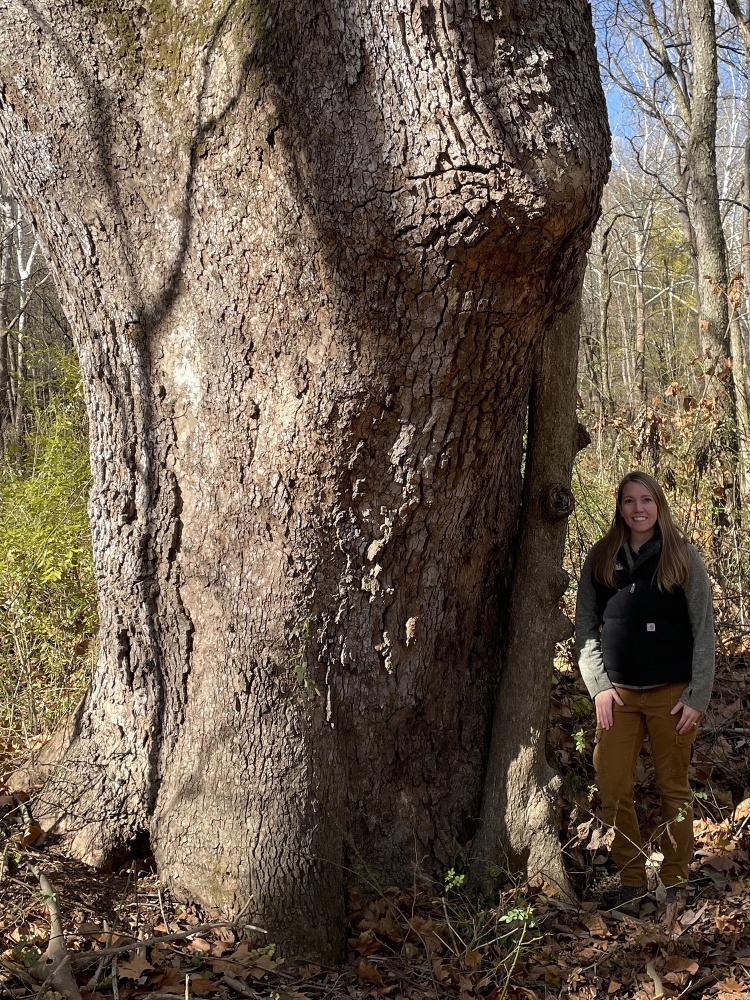
After 4 years there, I moved on to the same role in the Laurel Highlands, in the southwestern part of Pennsylvania. I worked primarily with private forest landowners in that area; another forester handled urban and community forestry work down there. One of the great things about working with private landowners is getting to explore new areas and drive down roads that you would never get to see for another reason. The Laurel Highlands had some amazing back roads to explore, and I stayed there for 4 years as well, and then the opportunity arose to move back closer to where I grew up. I jumped on the opportunity to be closer to family. My husband and I bought a house through the woods to my parents’ property and I’m once again enjoying exploring the woods I grew up in.
Now I work in Beaver and Butler, two counties north of Pittsburgh in western Pennsylvania in the Clear Creek Forest District. The Bureau of Forestry has broken the state into 20 forest districts, and the Clear Creek covers about 7 counties, so there are two other service foresters in my forest district. At times I work within those other counties, but my focus is Beaver and Butler. Similar to my first position, my coverage area has a mix of urban and rural areas. In addition to working with forest landowners, there are quite a few towns and school districts I work with as well.
I’m kind of a jack-of-all-trades in the work that I do, and I really enjoy the diversity of that. As a service forester, I provide technical forestry guidance, promote sustainable forestry, and can be involved in almost every aspect of forestry that doesn’t occur on state land. Some days I walk with landowners on one-on-one site visits, and other days I present to elementary school students or adult citizen groups about forest topics. I’ll talk to municipal leaders about their street trees or conservation planning. Some days I work with other district staff on state forest management or wildland fires. It really runs the gamut.
We’re often the frontline for folks with a forestry or tree question. People get directed to us when they want to speak to someone locally about their woods and we are available to talk with them, send them resources, or schedule site visits if needed. The work of service foresters is interesting because we’re woods people, so most of us enjoy being alone and taking quiet walks by ourselves, but communicating the stories of the work we do is really important. Service forestry really blends those two worlds – the science and the communication – quite a bit. You need to know the science but also be able to effectively communicate and promote the message of sustainable forestry.
One of the biggest challenges is remaining optimistic in a world when we have many new and emerging threats for our forests, and most landowners just don’t have the resources to successfully deal with them. We try our best to bring landowners the programs and resources that are available and to help them make the most of what they do have to take care of their woods. In this part of Pennsylvania, the deer pressure seems to increase every season, and invasive plant populations are growing at an even faster rate. It can be overwhelming sometimes to try to help landowners when they have a big restoration project on their hands.
A surprising challenge I’ve found with service forestry is that there’s not often a lot of feedback; I have to find self-assurance that what I’m doing is successful. I might talk to a landowner who takes my advice and does awesome work and then never reaches out again, so I just don’t know how much their forest has improved. Or maybe people listen while we walk their woods and then go do something unsustainable anyway. We’re always trying to have the biggest impact we can in this position, but there’s not always the satisfaction of knowing the outcome of our hard work.
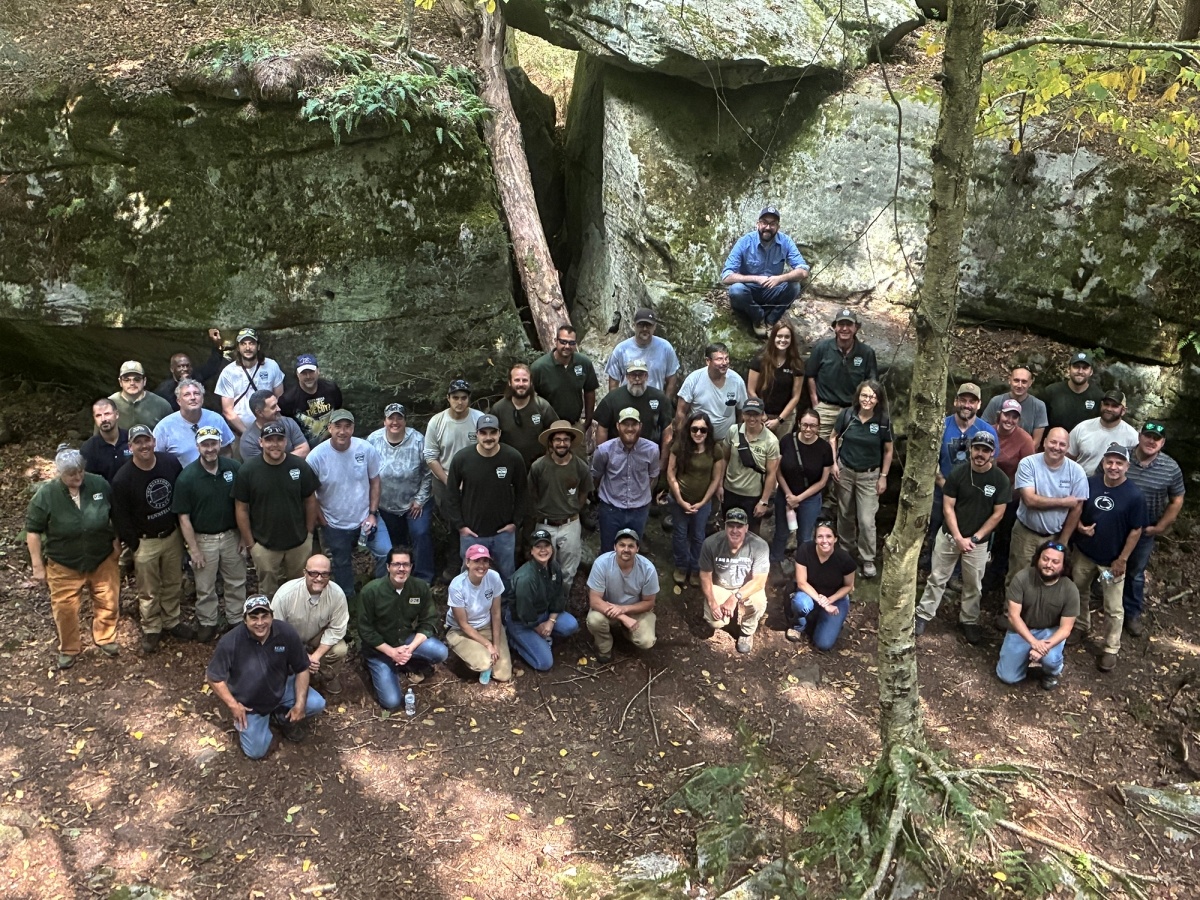
I see a lot of sites that are struggling, but also a lot where the trees are regenerating, the birds are there, the ecosystem seems balanced. Sometimes enough deer are harvested from a property and I get to see glimmers of hope in lots of young saplings, which is exciting. We are currently implementing a new program called the Pennsylvania Woodland Resilience Enhancement Network program, or PWREN, which connects landowners with financial and technical assistance to help them make meaningful progress on their land. There’s a lot of positive momentum within the rural and community program in the Bureau of Forestry right now.
I love when I can connect a landowner to something interesting about their land that they didn’t realize before, and then they later tell me that it really stuck with them. It can be as simple as a topographic feature or something historical about their property they never realized before. I walk a lot of properties, so I’ve learned to look for what possibly happened there in the past, like mining or homesteading, that other folks might not realize. Seeing the excitement of someone realizing, “Hey, my property is special and worth caring for,” is really rewarding.
I also enjoy connecting young people with nature. I feel so lucky that my parents really encouraged forever learning, exploring new places, and the importance of the natural world. When I can, I want to help connect young people to those valuable lessons too. Sometimes schools come out to the state forest, but more often I’m going into schools. Some of my favorite programs are when I get to walk around the school property with the students. Usually, it’s just a little strip of woods next to their school, but I’m hopeful they’ll leave knowing something more about a place that they look at every day, and maybe then they’ll care about it a little more.
There are so many people in the Bureau of Forestry that are knowledgeable and passionate about healthy forests, and I learn new things from the people I work with all the time. The natural world is always changing and it’s so complex, so I think it’s important to always stay curious and open-minded and to always be willing to learn.
Discussion *