
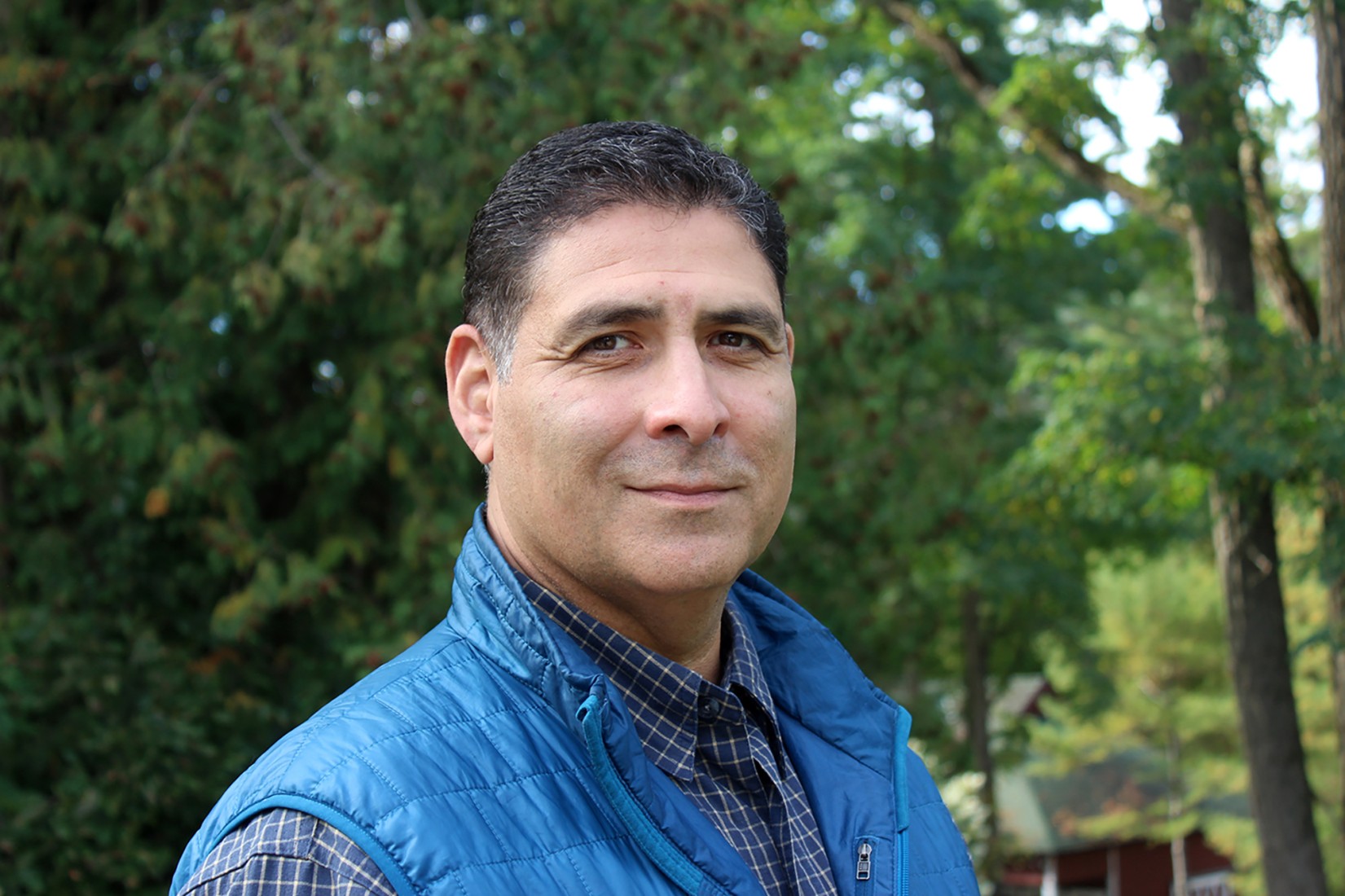
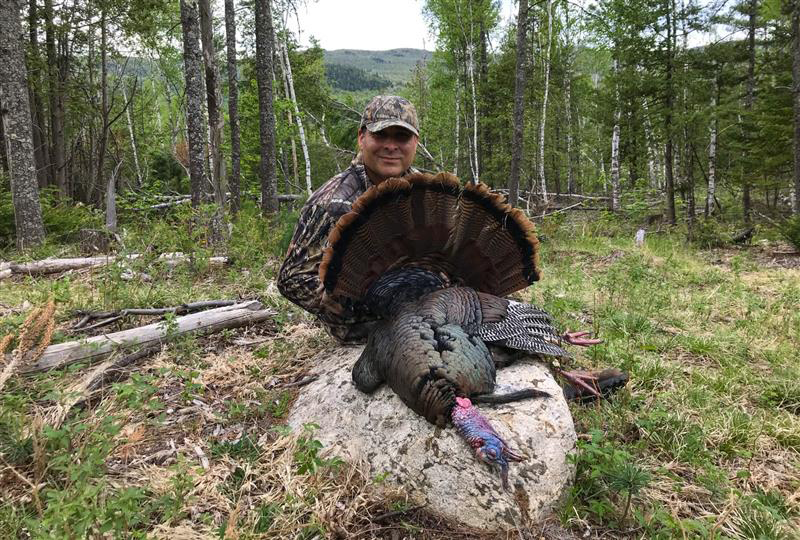
Raul “Rocci” Aguirre is the executive director of Adirondack Council, an advocacy organization dedicated to preserving the natural resources of Adirondack Park. He first started with the organization in 2013 after completing a master’s in conservation and resource management at Antioch University New England. Before Antioch, Aguirre spent 15 years working in the environmental field as a park ranger, field biologist, and land protection director. Outside of work, Aguirre enjoys fly fishing, hunting, paddling, gardening, and mountain living with his wife Emily in Keene, New York.
I was born in San Francisco, California. I grew up kind of bi-coastal between the Bay Area, where my dad was from, and the Catskills, which was where my mom’s family settled. I spent a lot of time traveling cross-country in my earliest years. My parents eventually settled in the Catskill area, just outside of the Hudson Valley on the backside of the Shawangunk Range. It was pretty rural, and growing up in the woods was really foundational to how I spent my time as a kid. My family was into hunting, and I loved to fish and be near rivers. My brother and I were given a lot of freedom to camp and go on long bike rides and to go to fish at different ponds and streams that were farther away.
Traveling cross-country, I got a lot of exposure to the National Park Service (NPS) and National Forests. I saw what made other parts of the country really special, and that became woven into my experiences as a kid. In school, I was really interested in history and science. I went to SUNY-Cortland for history initially. I was drawn to stories around landscapes, so I added an outdoor recreation degree late in college and stayed for an extra year to get that double major. I had a couple of really fantastic recreation professors, Dr. Andy Young and Dr. Sharon Todd, who really took me under their wing and got me started on my career path. At that point in my college career, I was really focused on becoming a ranger.
When I finished school in 1995, I started working seasonally as a park ranger. I worked in Wyoming, California, Nevada, Virginia, and Georgia. I got a broad exposure to how a lot of people relate to their landscapes in different parts of the country; I saw how a rancher in Wyoming relates to open space in a completely different way than a kid from Atlanta. The first five or six years I worked seasonal jobs, and then in the last few years I worked longer term positions in Point Reyes, California, and Morristown, New Jersey, before I got a full-time ranger job at the Upper Delaware Scenic Recreational River, near the Pennsylvania-New York border. I feel like that was kind of the first third of my career; I was learning stories of the landscape and traveling a lot.
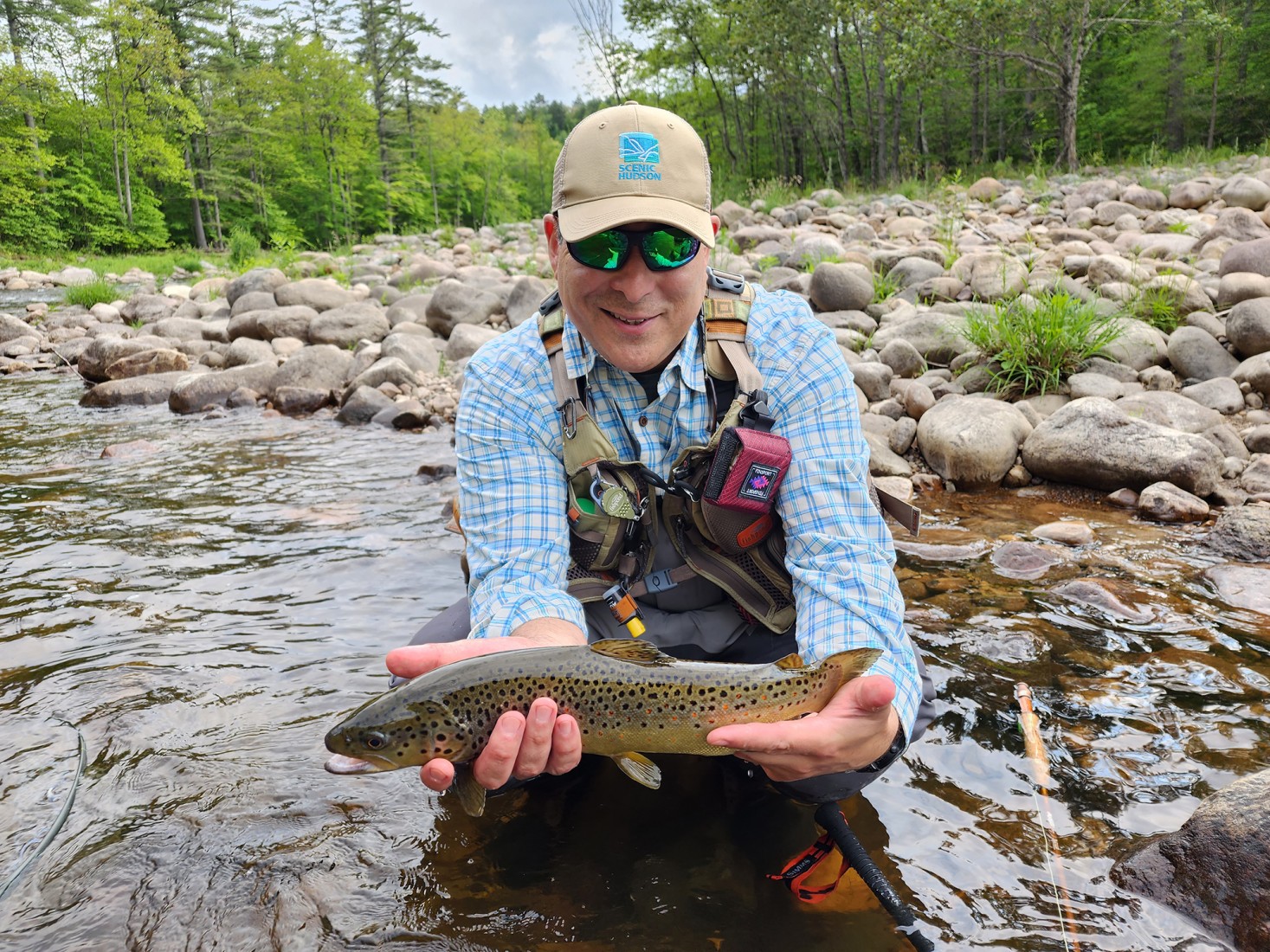
I left the NPS and went into more of a frontline conservation role; I wanted less bureaucracy and more hands-on work. I wanted to stay on the East Coast, and I was really into fly fishing. In the Catskills, fly fishing is a really important part of the culture and recreation. I worked first at Trout Unlimited as a field staff member and did a lot of riparian corridor restoration there. I became familiar with the Open Space Institute through that and learned about how they would protect these restored places. I realized I wanted to work in the land trust world; I loved talking with people about what was important about their land. I wound up at the Finger Lakes Land Trust (FLLT) and eventually became their director of land protection.
At FLLT, I got to work a lot with foresters and loggers, and it gave me a great perspective on permanently protecting open space. The scale of the conversation for them was so different; when I would talk about protecting a property in perpetuity with a landowner, they often would think through their lifetime, and maybe their children’s and grandchildren’s lifetimes. But the foresters would think far beyond that – I think they’re kind of the only folks who think on timescales like that. They may actively manage a place two or three times in their careers, and they’re thinking very long-term.
I was really hungering for more of an academic realignment at this point in my career. I wanted the chance to put the work I had done for 15 years into a more philosophical perspective. I also wanted to step up into executive management and work on a more senior level. So in 2010, I went to graduate school at Antioch University New England and studied conservation and resource management. My master’s was focused on how to run environmental and conservation organizations. It was more like an MBA focused on administration and crisis management and all of those nuts and bolts of how to run an organization. I worked with the Monadnock Conservancy during Antioch, but it was a chance to pause my career and look at all these different programs I had worked in through a new set of lenses, and think about the economics, the environmental impact, the political impact. I could think more critically about how these organizations worked.
When I finished, I made the move from Keene, New Hampshire, to Keene, New York. I came to the Adirondack Council in 2013 as the director of conservation. I left briefly in 2021 to work in an executive director role at Scenic Hudson. I got a lot of good experience there, and got to be closer to my family, but my wife and I loved the mountains and wanted to come back. I was able to come back in a deputy director role, and then in 2023, I stepped up first to the acting executive director, and then officially as the executive director that June. I feel like this chapter of my career has really been about how to fight for these important protected landscapes.
The Adirondack Council has a $3 million operating budget and doesn’t take any federal or state grants or funds, so all of that is raised privately. We have 20 full-time staff, including some part-time and intern positions. We have an Albany office and a government relations staff, and I’m often down in Albany or in Washington, D.C., to work on behalf of protecting the ecological integrity and wild character of Adirondack Park. A lot of it is, of course, Zoom calls and meetings, but I often say to people that to be really good at this work, it’s important to know this place personally and keep building connections and relationships in and across the Adirondacks. At over 6 million acres, including public and private lands, there are so many distinct sections of the park, and the issues and the management are different.
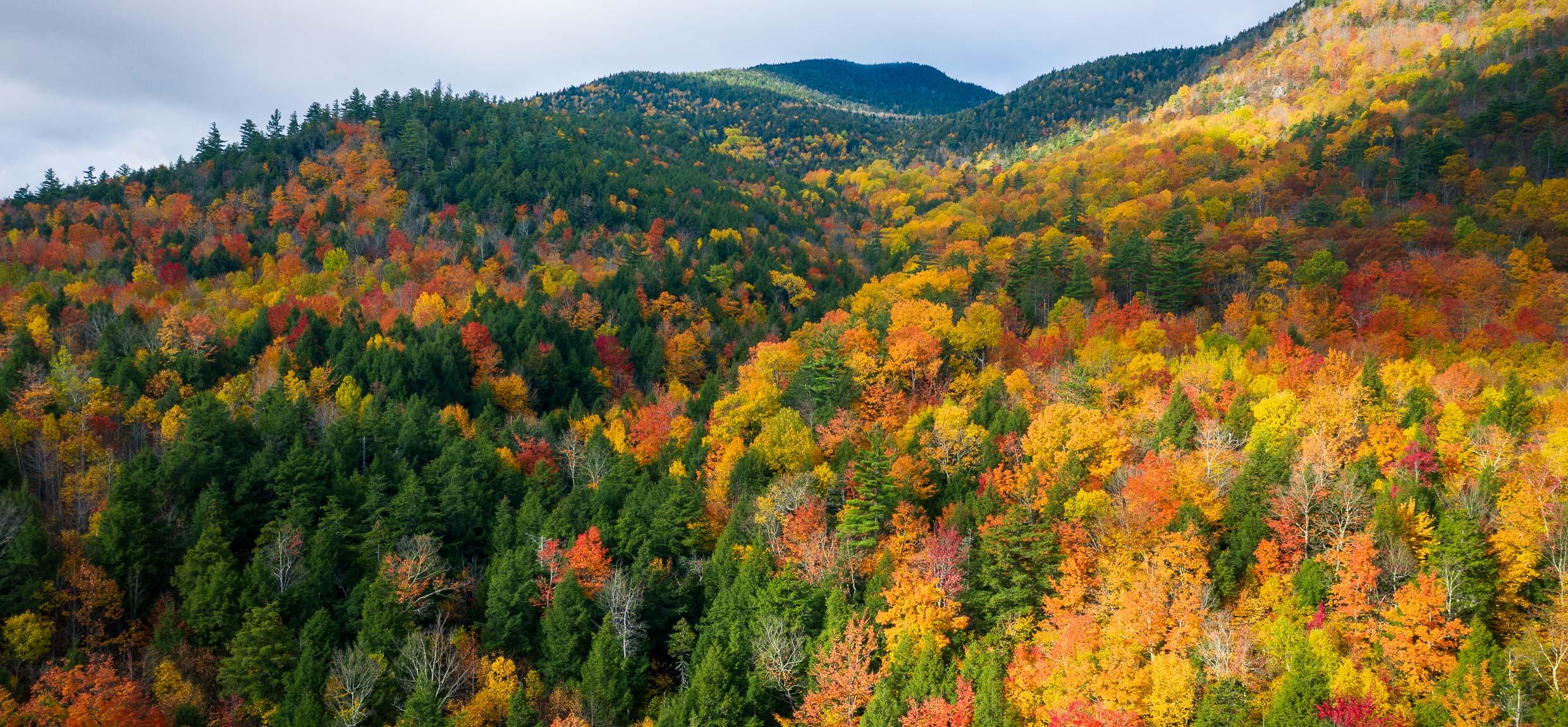
The Adirondacks are a globally significant ecosystem and landscape. It is one of the largest tracts of unfragmented temperate forest. We need to keep working on the narrative of how important this land is, because a lot of political changes can be driven by downstate interests in New York – and sometimes people just think of it as a recreation destination or an Olympic destination, but ecologically it is incredibly important. We need to make the Adirondacks relevant to more people; I always try to talk about the headwaters-to-harbor concept – about how upstate and downstate New York are all linked through the Hudson River. If you’re in New York City, you know the Hudson, even if you don’t know where it starts. There’s a SUNY-ESF program, the Timbuctoo Summer Institute, we’re connected with, where city kids come up here to the headwaters in the center of the park, where you can basically walk across the beginning of the Hudson River. It’s critical to build that sense of linkages and connections so that people feel like the Adirondacks are important to them, no matter what part of the state or the Northeast they live in.
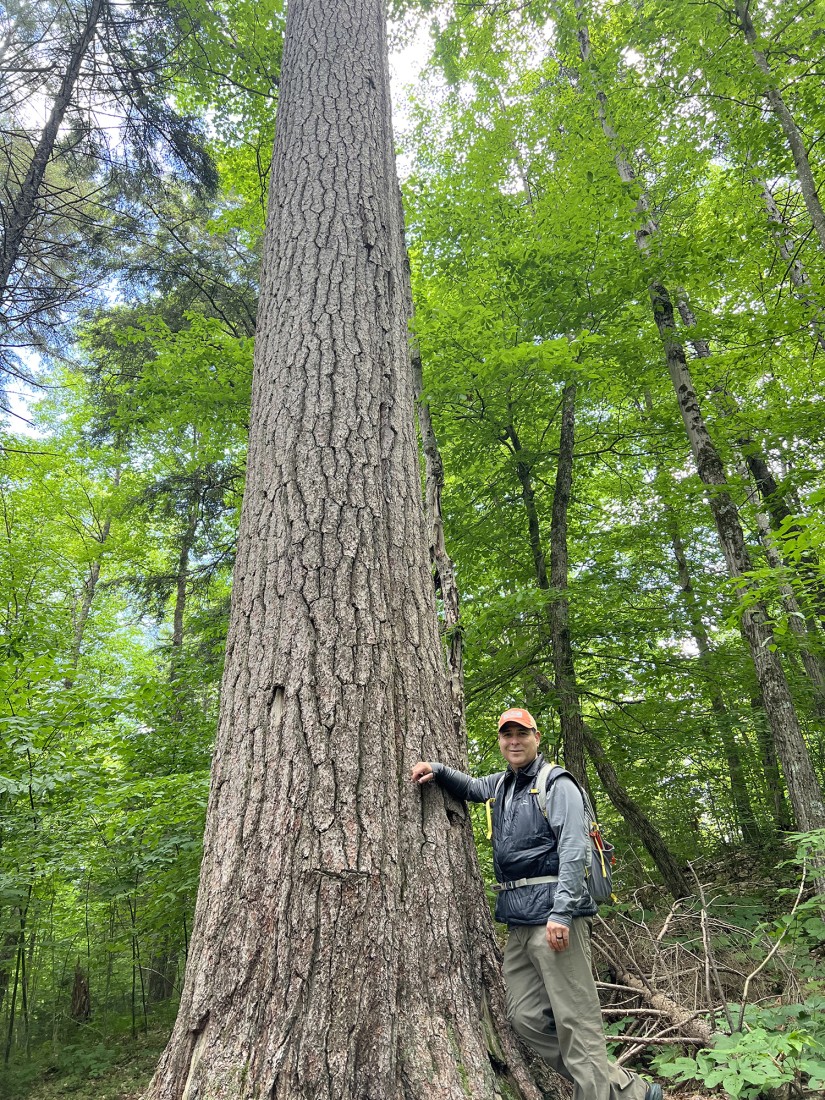
The Adirondack Council is involved in so many aspects of keeping the park running that people often don’t think about. A big one is solid waste transfer, and how we can support local communities, because there aren’t landfills in the two largest counties in the park. We’re pushing to move the needle on how road salt is used. We think a lot about infrastructure and the impacts of roads and car traffic. We document overuse impacts, which have existed for decades but were exacerbated during covid. The park can get loved to death in certain places. At the same time, there are 125,000 year-round residents living in a landmass the size of Vermont, so getting services to these hyper rural landscapes can also be a challenge. We try to always be at the forefront of best management practices.
We’re seeing a lot of federal deregulation and federal cuts right now to longstanding programs that have been instrumental to protecting the Adirondacks. I’m thinking about acid rain, air pollution, and water pollution especially. Those can have dramatic impacts on the landscape. This is especially challenging as we see budget cuts impact organizations that help provide vital services across the region. These cuts will impact how we spread funds to more places and organizations, which can be a challenge. People are very generous and really care about the Adirondacks but the challenges that are ahead will put a strain on how we do our work in the future, especially as we address the long-term impacts of this kind of deregulation and how to plan for it.
The nature of the political advocacy work can also be extremely demanding. I’m grateful every day to be a part of this work, but the frontlines of fighting to protect these landscapes – and the communities that rely on them and the natural resources they provide – takes a lot of navigating challenging political dynamics. But perhaps now more than in years past, there is a real sense of urgency that makes the belief in the Council’s mission and how essential the work is feel more important. Building bridges and spanning boundaries is a real core part of the work I do. Engaging authentically and being a voice for why this place is important is critical to getting this work done, and it’s something that I’m always aware of as a person of color.
I’ve been nicknamed Rocci (pronounced like Rocky) since I was a little kid, but my name is Raul Joaquin Aguirre. I go by both and I’ll gladly take both. As we’ve become more conscious of names and identities over the years, I’ve tried to honor my Hispanic heritage more, especially thinking about being a person of color in the environmental field, and particularly in a leadership role. I tend to be very private about it, but over the past decade I’ve tried to be less so. It’s really important to open up pipelines for people of color in the environmental field, not just for new and emerging professionals, but also in senior and leadership roles, and to talk about the unique challenges of working in white landscapes, particularly in the rural Northeast. It’s not just on a staff level, but also a board level and a donor level – so we need to continue building those pathways for people of color to find their way into this work.
The joy of this work is being in these places that are so special to so many people. To have a deep familiarity with the land and be a vital part of working to safeguard what makes it so iconic is deeply fulfilling. The rural communities here face challenges and people make real sacrifices to be a part of this place. But with that comes a sense of resiliency, strength of spirit, and a feeling of community that is unique to the Adirondacks. I’ve done this work all over the country, but I’m here for a reason. This place is home to me, and I see myself in this landscape.
Discussion *