

In the last installment, we investigated a nonrunning chainsaw with low compression. The compression was so low that the chainsaw failed the “hang test” (holding the saw by the recoil handle and watching it fall to the ground because of low compression). A secondary test with a compression gauge confirmed the issue, registering a low 80 PSI.
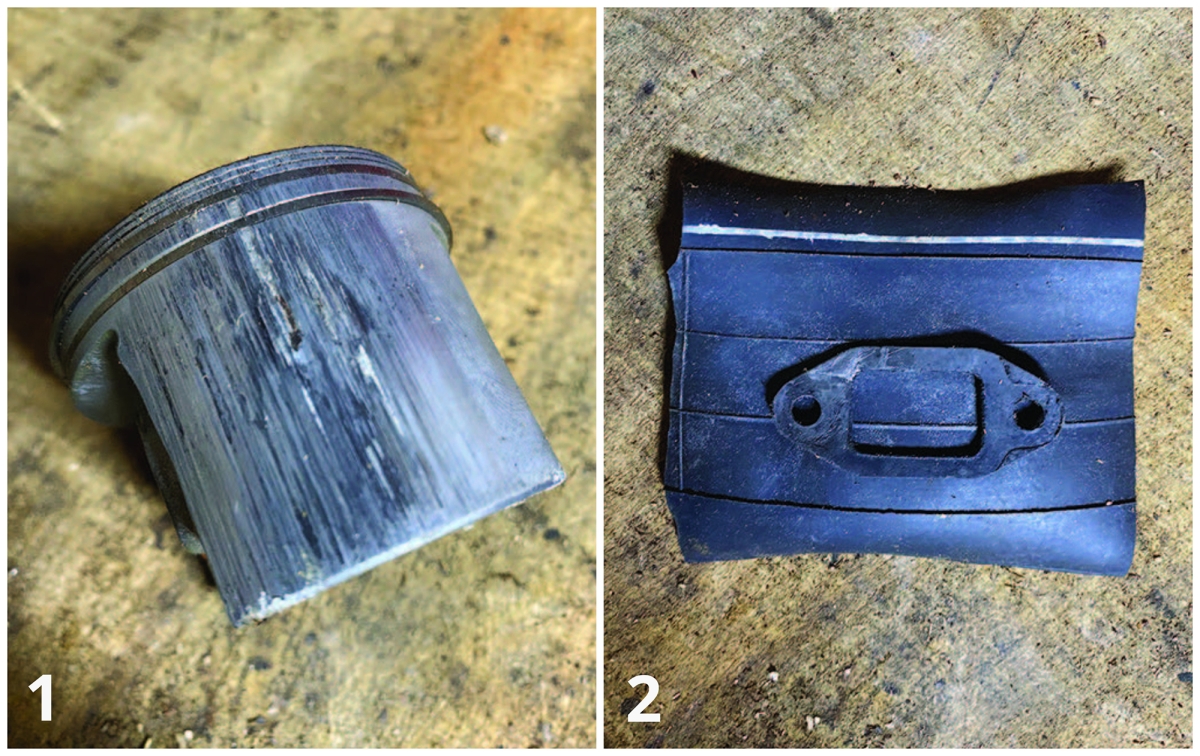
While the quick fix for these symptoms may mean removing the cylinder and simply replacing a worn piston and rings, such a fix may neglect the root cause, such as an air leak in the crankcase. In this scenario, removing the muffler offered a glimpse of the piston, which revealed scoring (deep, vertical grooves that prevent the piston from producing compression). A scored piston can be caused by running straight fuel without oil, cutting with a dull chain and overheating the engine, or an air leak in the crankcase. Knowing that this saw had a sharp chain and properly mixed fuel, I suspected a crankcase leak. (Image 1) This piston shows deep scoring caused by an air leak that allowed the chainsaw to overheat.
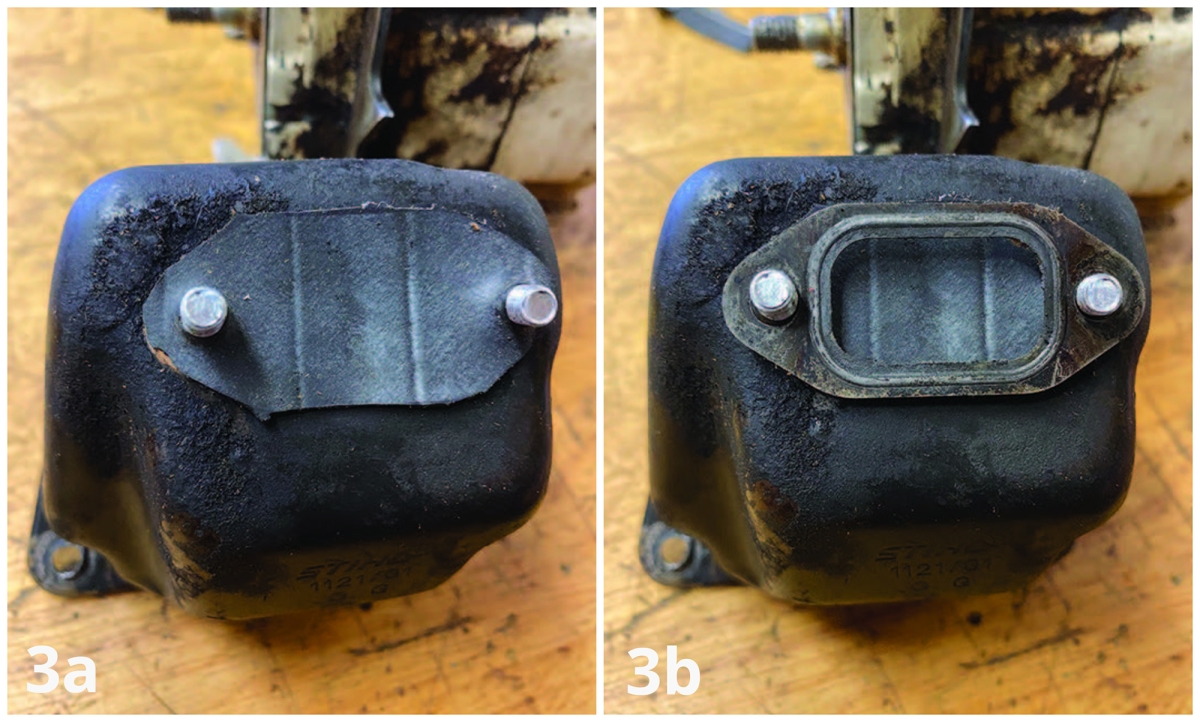
Pressure testing a crankcase to identify a leak requires sealing all engine openings and then pressurizing the crankcase to find the precise location of the leak. You can use an old innertube to block off the intake port behind the carburetor and the exhaust port behind the muffler. (Image 2) Use a utility knife to trace the outline of the carburetor and exhaust gaskets onto the inner tube for a precise fit. Then install those pieces in their respective locations and replace the hardware to seal the engine and make an airtight fit for conducting the leak test. (Image 3a) Place the rubber innertube over the backside of the muffler. (Image 3b) Then bolt the muffler with the innertube patch to the manifold.
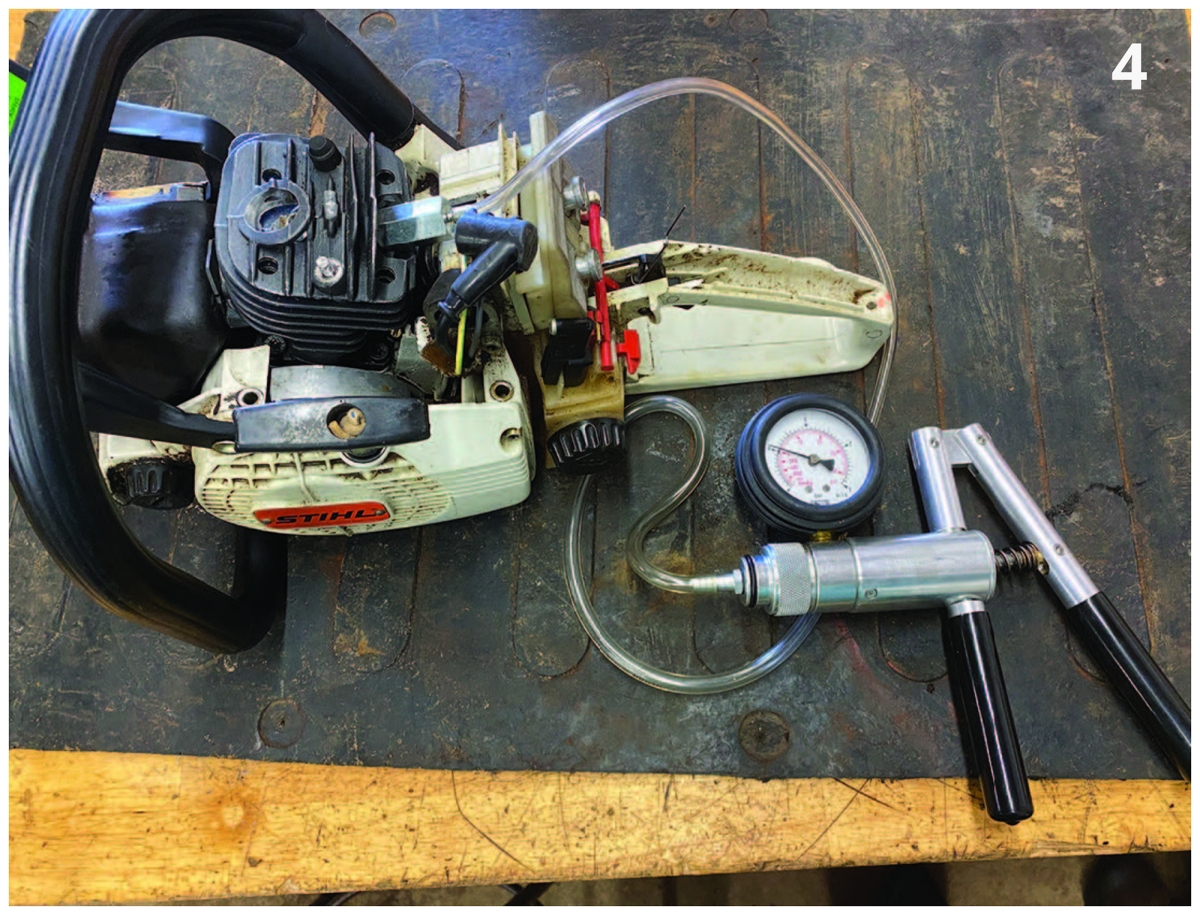
Next, remove the spark plug and replace it with a pressure tester plug. Attach the hose from the pressure tester hose and pump until it reaches 7 PSI. (Image 4) Watch the gauge for 10 seconds and note if it loses pressure. Any drop in pressure indicates an air leak in the engine, which must be repaired. To locate the leak, spray soapy water over any possible leak points (base of the cylinder, crankcase halves, and the crankshaft seals behind the clutch and flywheel) and observe where bubbles form.
In this particular case, we discovered a leak in the cylinder base gasket and the crankshaft seal. This indicates that the saw needs a complete rebuild that will include all new seals before installation of a new piston and rings. Had we simply replaced the piston and rings without diagnosing and repairing the air leak, the saw could have overheated and destroyed the piston again in as little as 10 minutes.