
On a summer day in the early 1990s, naturalist Susan Shea was exploring wetlands in her hometown of Brookfield, Vermont, when she came across something she knew was unusual. It was similar to a bog, but not quite like any bog she’d seen before. Shea contacted the Vermont Nongame and Natural Heritage Program, part of the state Fish & Wildlife Department, and ecologists from the program visited the site a few weeks later – as soon as they were able to secure landowner permission. I was one of those ecologists, working on contract for the program, and I joined State Botanist Bob Popp as part of a study we were doing on calcareous fens and riverside seeps. We were delighted to find a rare and unusual fen, a kind of peatland. Peatlands are wetlands where peat, or undecomposed plant matter, accumulates over millennia to form a spongy, carbon-dense mat that can be 30 feet deep, or even more.
While bogs are fed almost entirely by rainwater, fens are peatlands fed by enriched groundwater. With this influx of nutrient-rich water, fens can support all manner of uncommon species that don’t grow in bogs. Glorious orchids. Delicate and unusual sedges. Rare mosses in all shapes and sizes.
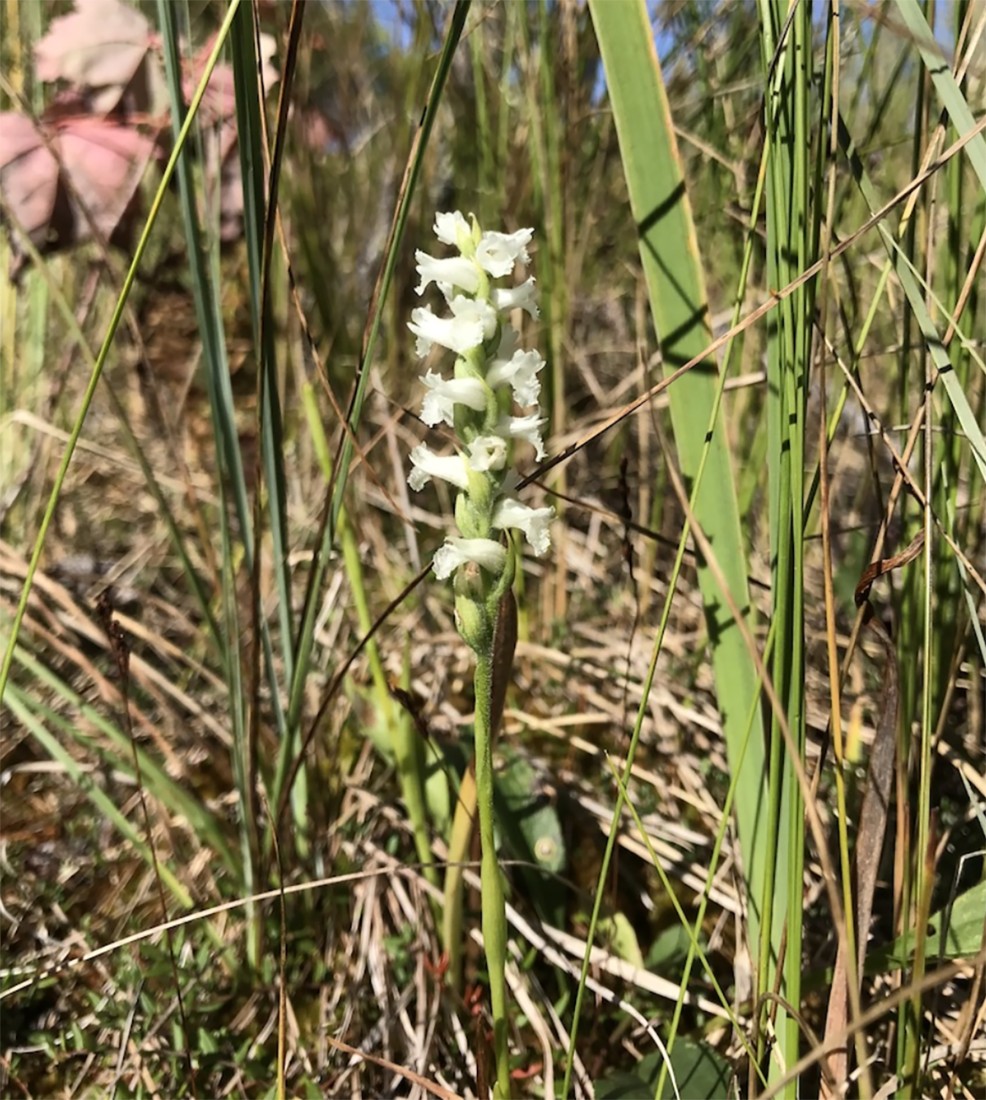
The fen Shea discovered had it all. Around the edges were pools with upwelling groundwater. There were rare mosses in those pools, and in the surrounding hummocks, too. We were delighted to find dragon’s mouth orchid, a very rare species in Vermont, and nodding ladies’-tresses, less rare but beautiful and unusual. Natural Heritage methodology uses three factors – size, condition, and landscape context – to evaluate and rank natural communities. Based on these three criteria, the Natural Heritage Program ecologists determined the fen to be of statewide significance.
Finding, exploring, and documenting natural communities – also called ecological communities – like the Brookfield fen has long been a compelling activity for ecologists and lovers of nature, for many reasons. For one thing, finding new and interesting places is just plain fun. Imagine the feeling of walking for the first time into a bog with its sundews and pitcher plants, or a cedar swamp with its mossy hummocks, or a rich northern hardwood forest teeming with wildflowers.
But what are natural communities? That’s one of the oldest and most famous debates in the field of ecology.
What Makes a Community?
Ecologist Frederic Clements (1874-1945), in his 1916 publication Plant Communities, described natural communities as acting like “superorganisms,” where species are interdependent, and the community functions much like a family unit, all following the same rules and growing and maturing together.
Soon after this, in 1917, ecologist Henry Allen Gleason (1882-1975) argued that plants and animals act as individuals and respond to their environments in their own ways. Gleason’s general theory didn’t gain popularity until extensive detailed research by ecologist Robert Whittaker (1920-1980), during the 1950s in the Great Smoky Mountains, showed that species composition changes gradually along environmental gradients, and that each species responds in its own way. For example, in spruce-fir forests, both spruce and fir are present, but on an elevational gradient. In Whittaker’s study area, red spruce was at peak abundance around 5,000 feet, while Fraser fir reached peak abundance above 6,000 feet. Whittaker concluded from his work (published in the journal Ecological Monographs in 1956) that there are no discrete, distinct, interdependent communities but instead groups of species that occur together only because they happen to require similar habitats. Whittaker’s work thus validated, with data, the Gleasonian theory. Most ecologists today hold this point of view.
Thankfully, we are still learning, and the more we learn, the clearer it becomes that the views of Clements, Gleason, and Whittaker each have some merit. Yes, species behave somewhat individually, yet the underlying physical habitats – the mountaintops, the bogs, the shorelines – remain relatively stable, and the same species tend to occur in those habitats for long periods of time. Recurring groups of plants, animals, fungi, bacteria, and protists may not behave as superorganisms, but they do grow and live together.
What is more, scientific research in the decades since Whittaker’s work has documented many real and important relationships between species that support their staying together in community. Beech drops, for instance, can’t live without beech. The oak gall wasp can’t get along without oak. And many trees rely on fungi to help them absorb water and nutrients in a mutually beneficial, symbiotic relationship. Vast underground networks of fungal strands, called mycorrhizae, make the connection. In exchange for supplying the trees with phosphorus, nitrogen, and water, the fungi receive carbon-rich sugars that allow them to grow and complete their life cycles.
Countless other examples of mutualism exist in nature. Bees feed on nectar and pollen, and in so doing, they facilitate pollination. Ants gather seeds of spring wildflowers, bringing them to their nests and therefore dispersing the plants. Fungi and algae grow tightly together as lichens, each organism benefiting the other.
So, there is value to thinking of species that often occur together and may benefit from being and remaining together as natural communities that arise when the right conditions allow them to form.
Defining a Natural Community
A natural community, as described on the Vermont Fish & Wildlife Department website, is “an interacting assemblage of plants and animals, their physical environment (bedrock geology, soils, and hydrology), and the natural processes that affect them.” A natural community type, on the other hand, is “an assemblage of plants and animals that repeats across the landscape wherever similar environmental conditions occur.” Other states have comparable definitions, although the names of the natural community types may vary slightly from state to state. For example, Vermont’s Rich Northern Hardwood Forest natural community type is called Enriched Northern Hardwood Forest in Maine. Some states have natural communities that do not occur in other states due to their unique geographic position or topography. Salt marshes occur in coastal states, for example, but not inland, and alpine communities exist in northern New England and New York but not, say, in Rhode Island or Connecticut.
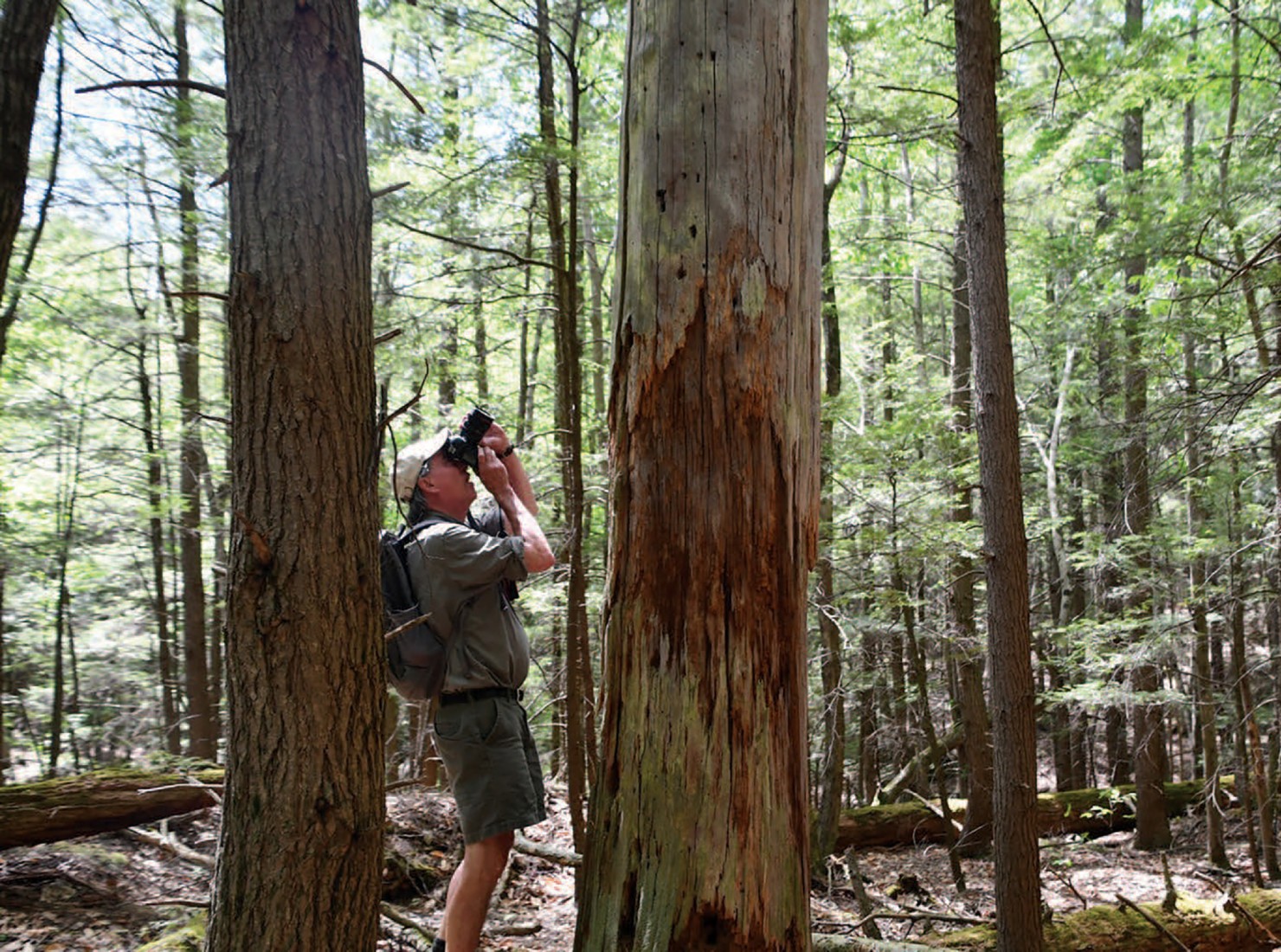
The “similar environmental conditions” that give rise to natural communities include underlying bedrock, soil chemistry, soil moisture, slope, aspect, elevation, and natural disturbances such as regular flooding, wind, and ice load.
For example, in Brookfield, wherever calcareous bedrock underlays organic soil, and where ground-water wells up near the surface, rich fens or intermediate fens – both natural community types – are likely to occur. Similarly, on the top of Mount Washington in New Hampshire, a combination of nutrient-poor bedrock, shallow soils, cold temperatures, high winds, and abundant precipitation create a habitat that supports alpine meadows and krummholz communities.
The term “natural community” grew out of the earlier concept of the plant community, expanded to include other organisms and the physical environment. Documentation of natural communities became a widespread practice in the field of conservation beginning in the 1970s, when conservation scientist Robert Jenkins joined The Nature Conservancy (TNC). He immediately set to work developing a method for keeping track of imperiled species and natural communities, what he dubbed “the last of the least and the best of the best.” He then created a network of Natural Heritage Programs in the United States and Canada. These programs are now managed by state and provincial agencies, and all operate under the umbrella of NatureServe, the central source of North American biodiversity data.
A key concept of Jenkins’s work was the coarse filter/fine filter approach to biodiversity conservation. The coarse filter, like a sand filter with large holes, protects the big things – the best examples of a region’s ecosystems and natural communities – and in the process protects, at least in theory, most of that region’s rare species, even the thousands we don’t know about or cannot practically count. So, if we protect good examples of all natural communities in a region, we should capture most of the species that occur in that region. Importantly, we will capture species that we don’t even know about, such as invertebrates and soil microorganisms. And perhaps even more importantly, we will protect the fullness of ecological processes in the region.
Some of the rarest known species, however, fall through that filter and need to be captured by a smaller mesh. Small whorled pogonia, for example, is a rare orchid that occurs in ordinary northern hardwood forests. Its habitat is common, so the places where it grows will not necessarily receive protection as significant natural communities. It can only be protected by finding individual populations through field inventory. The coarse filter/fine filter framework has taken hold in conservation science, and it is one of the prime reasons that Natural Heritage programs document natural communities to this day.
Monitoring Natural Communities
When Susan Shea discovered the fen in Brookfield 30 years ago, the state had just published its first classification of natural communities and was still learning how to classify and rank them. Shea’s discovery helped Natural Heritage Program ecologists learn how to find more fens. They studied the aerial photos of the area and sought out other places that matched the overhead look of the Brookfield fen. Many of the fens they discovered through the process had gone unnoticed in earlier searches for unusual wetlands, as they looked almost like small hayfields in the photos. Following up on desktop examinations of photos, Bob Popp, private ecological consultant Julia Watson, and I set out on a dedicated search for more fens.
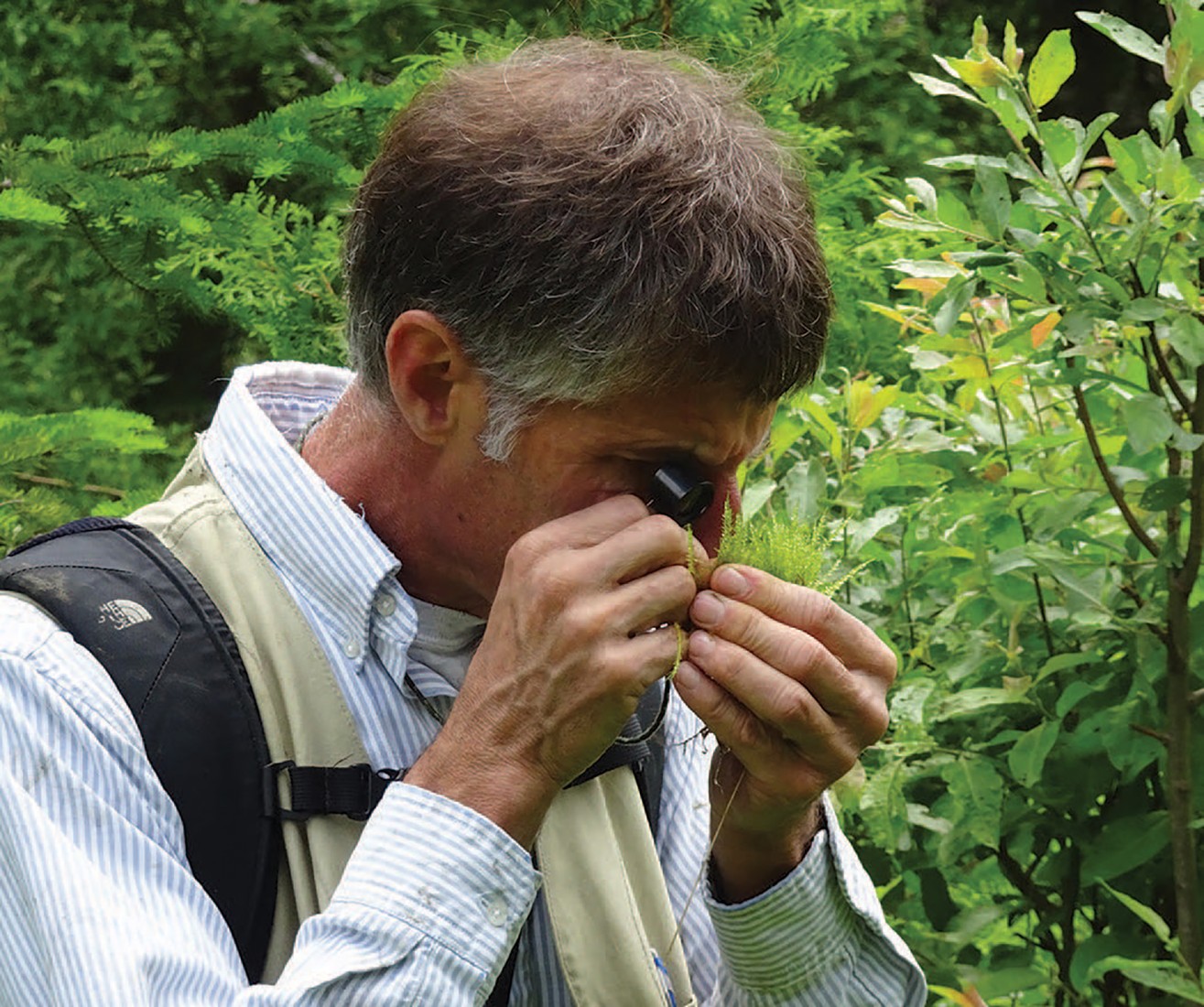
We began our inventory in Brookfield and surrounding areas of Orange County, then expanded the study to cover some other fen-rich areas such as the marble-rich Vermont Valley in the western part of the state and the calcareous areas of northeastern Vermont. The searches yielded numerous fens hiding among the forests, and we were able to add those to the state’s growing inventory of natural communities.
Having developed a search image, we also began to notice fens right along I-89 in Brookfield, and sometimes pulled over in the breakdown lane to do quick inventories. We even discovered a fen in the median strip, where a survey revealed a rare plant: twig rush. Popp and I wrote up the results in a report, and Everett Marshall, data manager for the program, entered the data and – in the analog methods of the early 1990s – put sticky dots on paper topographic maps to mark the fens. The Natural Heritage database, which today uses more sophisticated digital mapping methods, provides a baseline record that allows for tracking the condition of the fens over time. Through documenting changes in species composition, encroachment of invasive species, and signs of wildlife or human use, ecologists can monitor how well a natural community is functioning and if there are any signs of decline.
Happily, most of these fens have remained much as they were originally discovered. The cold groundwater that feeds them likely protects them from the effects of climate change, and their unusual chemistry, along with saturated soils, seems to make them less vulnerable to invasive species than some other habitats. Popp and others have discovered some incursions by off-road vehicles, but again, the waterlogged soils keep this to a minimum.
The Nature Conservancy has protected the fen Shea found, as well as several others discovered in the inventory, and TNC stewards keep regular track of the fens’ condition.
Today, technological advances have made natural community inventory work both easier and more exact. Aerial imagery has become much more precise and has advanced beyond photos taken from a plane or a satellite. Ecologists also use sophisticated imaging tools that can reveal such features as how tall an individual tree is and how broad its canopy, where there might be old-growth forests, or where a rivulet forming on the forest floor may indicate a seepage forest, an uncommon natural community.
This is all great news, but perhaps the happiest news for field ecologists is that even with sophisticated tools, walking in the woods, slogging through bogs, and scaling cliffs is still the only way to really know what’s out there. So far, we can’t know everything from space, and that’s a good thing.
Natural Communities Guides by State
- Natural Landscapes of Maine: A Guide to Natural Communities and Ecosystems by Susan Gawler and Andrew Cutko, 2018
- The Nature of New Hampshire: Natural Communities of the Granite State by Dan Sperduto and Ben Kimball, 2011
- Wetland, Woodland, Wildland: A Guide to the Natural Communities of Vermont by Elizabeth H. Thompson, Eric R. Sorenson, and Robert J. Zaino, 2019
- A Guide to the Natural Communities of Massachusetts, Southeastern Massachusetts Pine Barrens Alliance, 2018
- “Connecticut’s Habitats,” Chapter 2 in Connecticut Wildlife Action Plan, 2025
- Natural Communities of Rhode Island by Richard W. Enser and Julie A. Lundgren, 2006
- Ecological Communities of New York State by Gregory J. Edinger, D.J. Evans, Shane Gebauer, Timothy G. Howard, David M. Hunt, and Arlene M. Olivero. New York Natural Heritage Program, 2014
- Classification of Vegetation Communities of New Jersey: Second Iteration by Thomas F. Breden, Yvette Alger, Kathleen Strakosch Walz, and Andrew G. Windisch. Office of Natural Lands Management, Division of Parks and Forestry, NJDEP, 2001
- Terrestrial and Palustrine Plant Communities of Pennsylvania by Jean Fike. Pennsylvania Department of Conservation and Natural Resources, The Nature Conservancy, and Western Pennsylvania Conservancy, 1999