

Over the past decade, a new generation of forest “bioproducts” has emerged from university research labs in Maine, combining the natural benefits of wood with a dose of high-tech engineering. Home heating oil, kerosene, and jet fuel made from ordinary cellulose. Insulation from fiber that is as efficient as pink fiberglass insulation. De-icers, fire suppressants, artificial bones, and even computer chips made from an exotic material called carbon nanofiber.
Although these products are only now beginning to reach consumers, researchers and entrepreneurs say widespread adoption could significantly boost carbon sequestration and storage, eliminate single-use plastics in many applications, and reduce or eliminate emissions associated with manufacturing and transportation. And because their manufacturing processes use waste wood, slash, and underutilized species that are already growing in Maine, the forest bioproducts category may also be instrumental in revitalizing communities whose economies and cultures have long depended on forests.
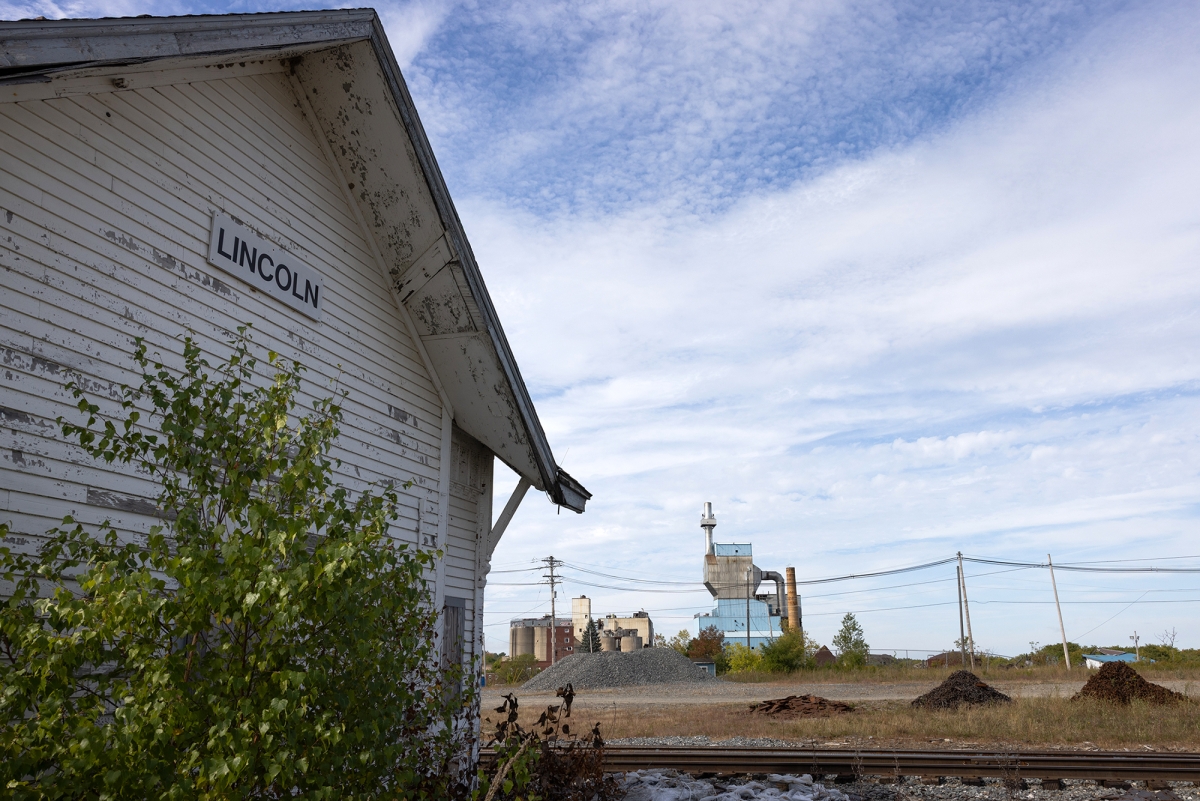
One such town is Lincoln, nestled between the Penobscot River and the shore of Mattanawcook Lake, about 40 miles up Interstate 95 from Bangor. For much of the 20th century, people often called the town “Stinkin’ Lincoln” because of the sulfuric odor that emerged from the Lincoln Paper and Tissue plant, which sat on a nearly 400-acre site just off Main Street.
Although it still makes the locals cringe, the rhyming epithet captures the indelible connection between town and commerce that characterized mill centers in Maine and beyond in the 20th century. Even mill town residents not directly employed at the mills often depended on them – and their workforce – for their livelihoods.
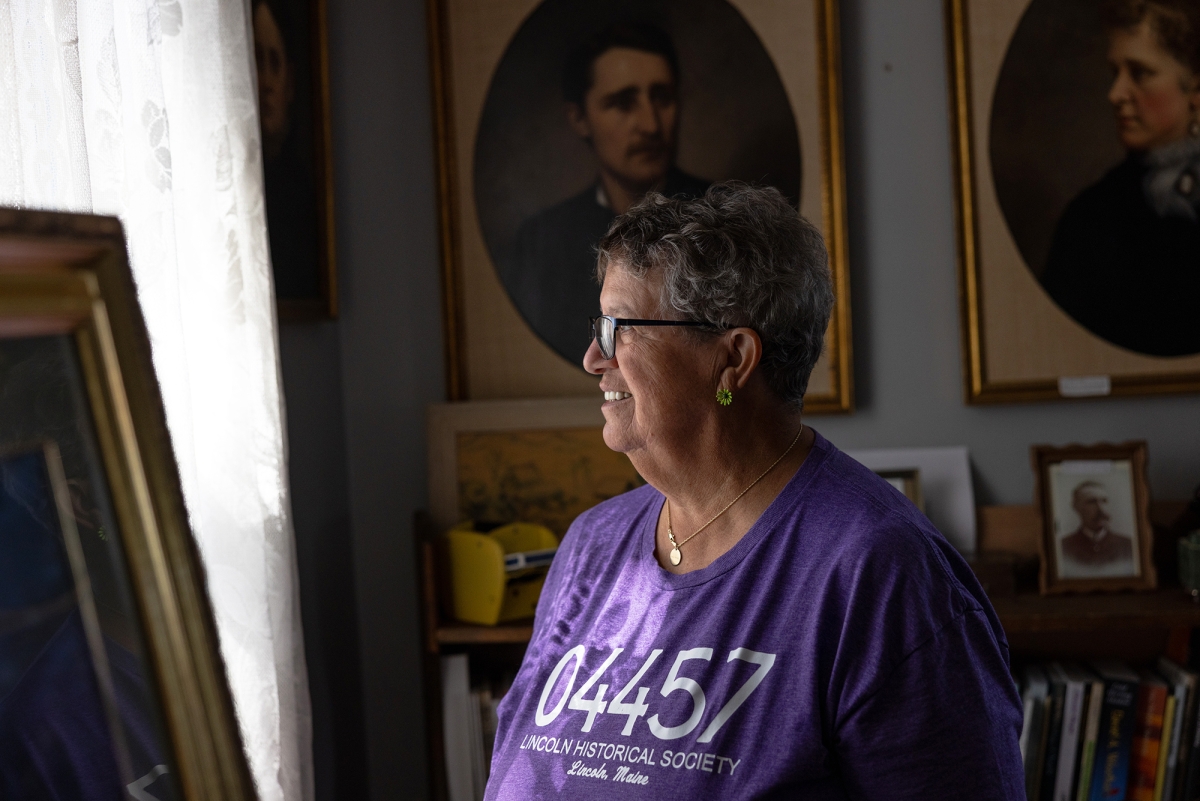
“It’s amazing how many people, their first job was at the mill,” said Lincoln Historical Society President Cathy Moison, who mounted a new exhibition on the paper mill during the summer of 2025. “We had a fellow just here telling me how he got hired at the mill because he dated a (mill) superintendent’s daughter in high school. When he got out of the military he came back and said, ‘I need a job,’ and they put him to work. I mean, it was that kind of culture where people with no training, no background in it, could get a job and learn and make good money. That’s what I grew up with. People did well working at the mill … and hard work would get you up through the ranks.”
Today, Lincoln stands between that historic past and an uncertain future. After a boiler explosion rocked the town in 2013, the paper mill began a series of layoffs and downsizing that culminated in its bankruptcy and closure in 2015. The town found itself with a 387-acre property, in the heart of its commercial district, contaminated by asbestos and other environmental hazards that would require a $60 million cleanup operation.
But far from seeing this as a calamitous ending, town officials jumped at the once-in-a-lifetime opportunity to chart a new future as the capital of Maine’s new forest bioproducts economy. While other towns on the Penobscot may have been “absolutely floored” by similar closures, said Lincoln’s Economic Development Administrator Ruth Birtz, Lincoln had been developing a Plan B – and Plans C, D, and E – for just such an eventuality.
A Town Reimagined
“I started working here in 1991, and it was always in the town council’s mind that they needed to plan for if and when this happened,” said Birtz, who grew up in Lincoln and began her career in municipal government as a tax assessor. This deep-seated foresight emerged from a succession of mill shutdowns and last-second re-openings that sometimes required townspeople to buy bonds to capitalize new ownership groups and equipment. And it came in the form of tangible actions: establishing vital financial reserves, continuously updating comprehensive plans, establishing a special tax-increment financing district for the mill site, and deliberately rebranding Lincoln as “more of a destination,” Birtz said, leveraging both its past and its abundant natural resources to place a big bet on new forest bioproducts. During the multiyear process of acquiring the mill site, the town hired Steve Levesque to transform its vision into an actionable plan.
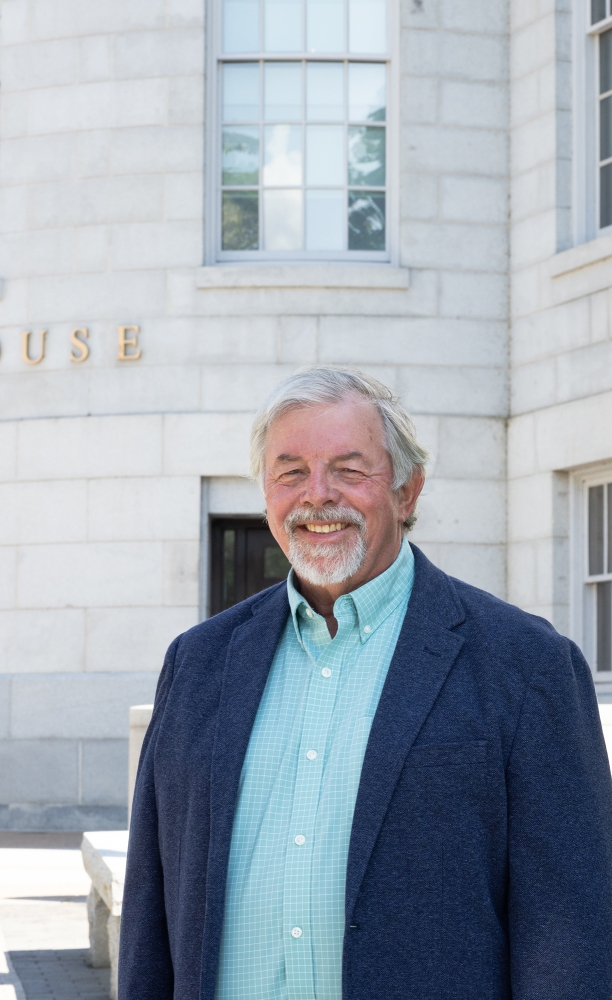
Levesque arrived in Lincoln with impeccable credentials. After serving as Maine’s commissioner of economic and community development from 1998 to 2003, he led the effort to redevelop a former naval air station (and Superfund site) in Brunswick, just north of Portland. Within 10 years of the base’s official closure, the rechristened Brunswick Landing was home to 2,400 new jobs, a business incubator, $150 million in new town valuation, and $3 million in annual taxes. Although the redevelopment challenges at the Lincoln mill site were just as daunting, Levesque quickly agreed to come out of retirement because the upside was simply too great to pass over.
“First, you had a town that believed in itself,” he said, ticking off a list of Lincoln’s advantages, “and it was really aggressive in taking over and acquiring the site.”
Second, with a stable population of nearly 5,000 and a recent industrial past, Lincoln already had industrial infrastructure assets in place. The town boasts upgraded rail services (40 miles an hour for freight), intermodal transportation facilities, easy access to Interstate 95, essential utilities that include power and natural gas, and established water and sewer systems.
Third, Levesque said, was that despite the mill closure, Lincoln’s forest products supply chain – from the loggers and truck drivers to smaller manufacturers, lumberyards, and processors such as Treeline, Haskell Lumber, H.C. Haynes, and Johnston Dandy – remained intact. “The town has always been dependent on forest products, but it has always been supportive of it, too,” Levesque said. “It’s been able to remain a service center for the industry in northern and eastern Maine, despite all that happened.”
And fourth, the town had the forest. The prodigious Lincoln-area “wood basket,” which also includes the nearby communities of Chester, Enfield, Greenbush, Lee, and Howland, remains productive even after three centuries of near-continuous harvesting. By focusing on forest bioproducts and clean energy technologies, Levesque’s redevelopment plan would capitalize on an identity that has been 300 years in the making. As Birtz puts it, “Aroostock County has potatoes, Downeast Maine has blueberries, and in Lincoln… we have wood and water. It’s what we’re known for.”
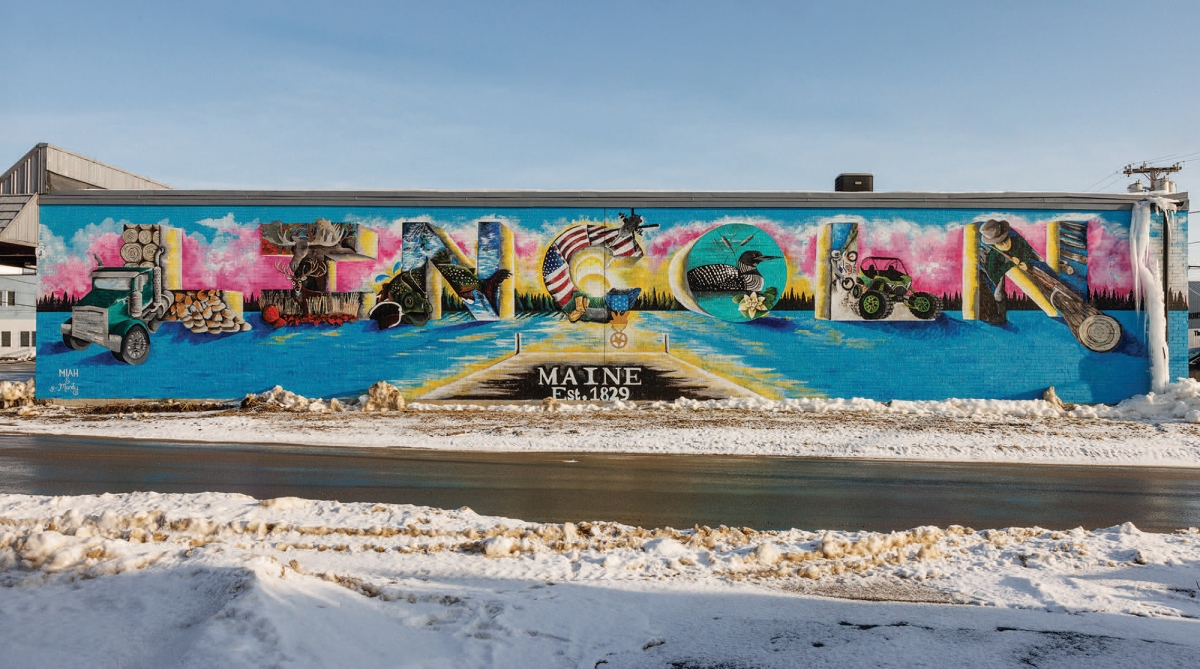
Levesque’s plan calls for a cluster of businesses that leverage forest-based resources while being ecologically sound and sustainable, aligning it with the values of a new generation of residents. But Levesque and Birtz couldn’t start marketing the site, rechristened the Lincoln Technology Park, without making significant headway into the remediation and cleanup effort.
Since 2019, the town has attracted more than $20 million in grant funds for remediation and infrastructure development. Key projects have included a $750,000 EPA grant to dewater lagoons, $500,000 to clean a lot already under contract with an anchor tenant, and a $5 million grant to demolish the former mill’s powerhouse. Significantly, a $1 million grant-and-loan from the Maine DEP will establish an onsite asbestos containment area, saving an estimated $10 million in transportation costs. Birtz said one new tenant – Revision Energy – has taken an option on the containment area land for a second community solar project, which could provide electricity to other tenants.
A new wastewater treatment plant is also planned, estimated at $15 million, and recent legislative approval for a facilities-district will allow for long-term, low-interest loans, insulating Lincoln’s taxpayers from liability. Additionally, an innovation center, supported by a federal $638,000 Northern Border Regional Commission grant and a pending $3.7 million Economic Development Administration grant, will provide workforce training and incubator space for new businesses.
“They’re making it happen one piece at a time,” said Moison, the historical society president. “They are cleaning up the waste and putting the site to good use that perhaps wasn’t done before…. It’s pretty impressive.”
Landing the Anchor Tenant
Plans are all well and good, and the Lincoln Technology Park redevelopment plan gained momentum with each announcement of a new state or federal grant. But what townspeople really wanted to see, said Birtz, was a shovel in the ground. Until construction began, the talk about new forest bioproducts remained just that: talk.
“When you’re doing remediation and cleanup, and you’re doing rehab of utilities and infrastructure, it doesn’t really show right away,” Birtz said. “That’s not building, that’s not construction. That’s not something where you can go and apply for a job. And [people] also don’t understand that the process of getting these permits through the state of Maine for the air emissions, for the wastewater, for the site plans, and everything else can take anywhere from six months to a year.”
All along, even as the cleanup continued, Birtz and Levesque kept talking to prospects while applying for more grants and touting the new technology park’s advantages. After nearly two years of negotiation, they landed their first deal, and the town council inked a 20-year lease agreement with Biofine Developments Northeast in March 2023.
The company intends to build its first full-scale biorefinery at the former mill site, utilizing materials such as wood fiber and paper pulp to produce fully renewable chemicals, carbon-negative biofuels, a green aviation de-icer, and other products across a range of industries. Biofine holds exclusive rights to the patented processes involved, and its technology already has been proven using pilot-scale plants currently housed at University of Maine’s Technology Research Center in Old Town (see “The Evolution of Maine’s Forest Bioproducts Industry” in the Autumn 2025 issue of Northern Woodlands).
According to Biofine CEO Stephen Jones, the plant will create approximately 200 full-time jobs for residents, including direct hires and inferred positions (jobs that are created in the broader economy due to the direct jobs and the company’s new spending), with plans for further expansion in the future.
“Biofine is not just a biofuels business,” he said, noting that it made sense to start with home heating fuel because of its lower barriers to entry. “It is a green chemicals-and-fuels business turning cellulose feedstock of all kinds into a whole, diverse range of green carbon-negative chemicals, some of which can be turned into fuels, some of which can be used for other purposes. Pharmaceuticals, cosmetics, de-icing agents, just a whole host of things.”
In the summer of 2023, the Biofine project gained more momentum when Sprague Resources LP, a New England company that stores, distributes, and sells refined petroleum products and natural gas, announced a deal to buy all the dropin green home heating fuel – about 4 million gallons a year – that Biofine planned to produce. The off-take agreement, as it is called, is often a key development for startup biotech companies to move from patent or pilot project to full commercialization.
In August 2025, Jones said that prospects were so strong that Biofine hoped to modify their lease, planning to undertake the first two phases of development simultaneously, which would result in a larger facility than initially conceived. The project’s financial closing is slated for the end of 2025, Jones said, with construction to begin in the first quarter of 2026.
When it becomes operational, Jones projects the biorefinery will remove 40,000 tons of CO2 a year from the atmosphere. Closer to its new home, the company not only promises climate-friendly and environmentally responsible products, but also offers the region a cleaner future. Instead of an ever-present odor, poisoned ponds, and white soot that occasionally fell like snow (“it would take the paint off cars,” Moison recalls) during the paper mill’s heyday, the new plant will not “have any emissions that are as remotely toxic – or just unpleasant – as the mill’s, and we’ll return water that’s cleaner than we took it out of the pond,” Jones said. He predicts the plant will produce a “slightly sweet smell rather than the sulfuric one” that Lincoln residents recall.
A Forest Bioproducts Center of Excellence
Levesque considers Biofine to be a pivotal first project, not only serving as an anchor tenant for redevelopment at the former mill site, but also to generate new forest bioproduct opportunities across the entire Lincoln-area wood basket. From the very beginning, the redevelopment plan included the innovation center to develop a labor force for prospective tenants. And the idea that Lincoln would become a center of excellence – where forest bioproduct entrepreneurs could co-locate their startups and leverage know-how, share infrastructure, and mutually benefit from business-to-business commerce – has been at the heart of the project.

“The goal is to have a lot of different businesses, a lot of different plants here that have some ability to interact and support each other in various ways,” said Brian Souers, who serves on the board of the nonprofit Lincoln Lakes Innovation Corporation and is founder and CEO of Treeline Inc., a diversified forest products, equipment sales, and transportation company located just across the river in Chester. “It’s just interesting how that happens in areas where people are fueling off each other. I’m very optimistic about the future of the forest products industry.”
In addition to Biofine’s commitment to the park, Levesque said he’s also working with a “very interesting biomass project,” as well as Revision Energy’s plans for community solar at the site. And in a potentially game-changing deal, Form Energy, a Somerville, Massachusetts–based developer, announced plans in August 2024 to deploy an 85-megawatt, multiday battery system in Lincoln. With funding from a $147 million federal Department of Energy grant and tax credits approved under the 2022 Inflation Reduction Act, the facility would store renewable energy from sources such as wind power for extended time-periods to power up to 85,000 homes and businesses.
But Birtz resisted the idea that success is inevitable. For instance, six months after Form Energy’s big announcement, the Trump administration cancelled the federal grants and tax credits. Work on the project, originally scheduled for completion in 2028, now awaits the outcome of court cases seeking to force the administration to reinstate already awarded funds.

The Trump administration also cancelled $23 million in federal funding for a new Maine Forest BioProducts Advanced Manufacturing Technology Hub, announced at the start of 2025, a move that has taken some of the wind out of the emerging sector’s sails. According to participants in the Tech Hub funding proposal, that money could be restored eventually, but awardees will need to re-compete for available funds. Updated RFPs have not yet been released.
The silver lining? Lincoln remains well ahead of other communities that also have aimed to become the “forest bioproducts capital of Maine,” given its head start in funding, expertise, existing infrastructure, and the town’s grit.
“We are still feeling pretty optimistic about the Form Energy project because it’s necessary to ensure the benefit of all these green energy projects,” Birtz said, adding that the town expects to have clarity on the project’s fate by the end of 2025. “So, we’re working on the final details of that lease right now and we’re moving ahead as if nothing’s changed.”
“You just keep plugging along,” agreed Moison, who expects Lincoln Technology Park to exceed even the most optimistic projections over the next few years. “If this one project doesn’t happen, the next one will, you know what I mean? You can’t cry in your beer and give up. If you give up, you’re done.”
The Promise of Better Forestry
Today, Maine is the most heavily forested state in the country, and forest growth exceeds its annual harvests. Could the feedstock appetite of a vigorous new forest bioproducts industry threaten the state’s greatest natural resource, its climate benefits, and the wildlife habitat it supports?
Experts including Shane O’Neill, forest industry business development manager at University of Maine’s School of Forest Resources, said there’s little likelihood of that outcome. Because the industry is focused on materials that might otherwise be left in the forest or have limited market value – including low-quality pulp chips, slash, and precommercial thinning residuals – O’Neill said industry experts aren’t projecting a significant increase in the number of acres harvested, at least in the near-term. And if you introduce markets that rely on material from better stand management and sustainable forestry, he noted, you make those acres in use more productive and disincentivize harvesting remote, older growth stands.
“Think of forestry like agriculture,” he said. “Trees are a crop, but at a different scale – call it slow farming – measured in decades, not months. We can leave the pockets of old-growth forests alone and focus on using sustainable practices on our regenerating forests.”
Many conservationists hold similar views. Karin Tilberg, the former president and CEO of Forest Society of Maine, got her introduction to the North Woods back in 1979, when she led backpacking trips down portions of the Appalachian Trail near Lincoln. She believes a new forest bioproducts industry, particularly one that utilizes low-value trees, is crucial for expanding conservation opportunities in Maine’s forests.
“It’s really important to think of ways that help landowners…keep the forest undeveloped and undivided,” she said. While tools such as conservation easements and carbon credits can help, one of the most effective ways of ensuring that forested lands stay forested is to keep them productive. Because virtually all the new forest bioproduct manufacturers utilize low-value species and slash, the emerging industry, Tilberg said, is “good news overall for longer rotations, a better diversity of age classes, and healthier forests.”
That’s because without new markets to sell the “weeds,” forestry prescriptions including precommercial thinning, early commercial thinning, crop tree release, and timber stand improvement “simply don’t pencil out for most landholders,” said Alec Giffen, New England Forestry Foundation’s (NEFF) senior forest science and policy fellow. He believes that new forest bioproduct companies may hold the key to broad implementation – in Maine and other northeastern states – of sustainable forestry practices, including NEFF’s Exemplary Forestry (EF).
Advanced by NEFF to ensure sustainable forestry over the next century, EF has three main goals: mitigating climate change, improving wildlife habitat, and producing more and better-quality wood. While these goals may have once seemed in conflict, Giffen said, NEFF studies and pilot programs suggest that exemplary forestry practices – while requiring landowner patience, greater selectivity, and smaller, environmentally sensitive machinery – can increase stocking in terms of both timber volume and carbon while simultaneously producing more and better-quality wood over time.
“There’s a certain expense to laying out the harvest prescription and the loggers moving their equipment there, so for many landowners, the more cash you get from that harvest the better,” said Bryan Wentzell, executive director of both the Maine Mountain Collaborative and Exemplary Forestry Management, two not-for-profit entities based in Maine. “The most efficient thing might be to use equipment like a feller buncher and a skidder that go in, take more trees from one spot, and move it out. But if there is a strong market for low-value wood, it makes EF more financially viable. It doesn’t mean you’re harvesting less timber. It means you’re doing it in a different way across the landscape, and over time harvesting more timber.”
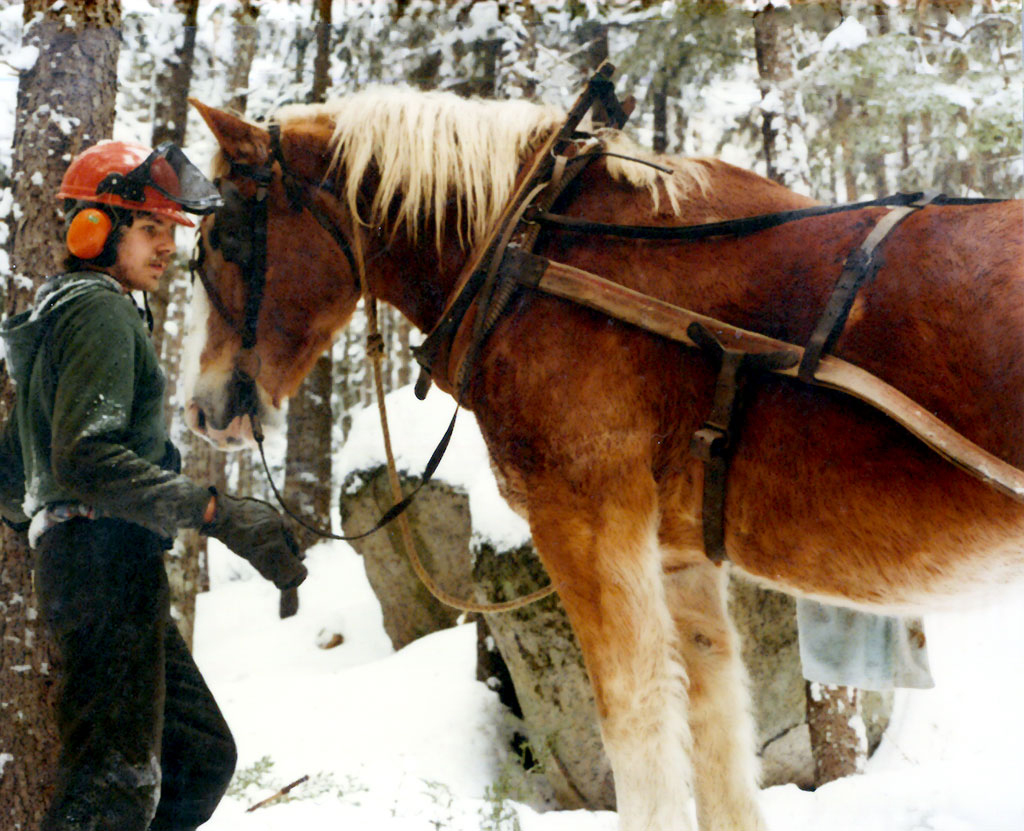
Whether or not the new forest bioproducts industry encourages the uptake of EF specifically, Souers – who started harvesting wood with a horse named Captain and an International S7 log skidder in 1981 – believes that bundling these new market opportunities with carbon credits and conservation easements could collectively provide a “reasonable rate of return” to motivate landowners to practice sustainable forestry and to keep their lands forested. At the same time, he said, the demand for low-value wood will spur innovation and new investment in logging equipment, leading to the use of “smaller footprint pieces of equipment” that will both reduce the environmental impacts of harvesting and lower the expenses for young loggers entering the industry.
“What’s so great about all this new use of trees is they don’t have to be big trees. They don’t have to be saw timber size or quality,” Souers said. “All these kinds of products that we’re talking about – biochar, biochemicals, biofuel – can be made out of small trees, the weeds. And so, the beauty of this is we’re going to be able to weed our forests. As this new generation of plants get online, we’ll be able to get back to taking care of the forest again.”
A Vision for the Future
If Lincoln’s municipal and business leaders can implement Levesque’s plan the way the town of Brunswick did a decade ago, it will have a dramatic impact on the former mill site and the village that abuts it. Creating a hub, a center of excellence for the emerging forest bioproducts industry, will provide new economic opportunities to the regional wood basket that surpass those based on pulp and paper production. It could take exemplary forestry mainstream, leading to healthier, more productive woods while improving wildlife habitat and improving carbon sequestration and storage. With University of Maine’s assets – including the Forest Bioproducts Research Institute and its Technology Research Center, The Advanced Structures and Composites Center, and the Process Development Center and its nanocellulose production capabilities – just 20 miles down the road in Orono, the once metaphorical product development path from lab bench to commercialization becomes a literal technology corridor.
“I’ve had this vision in my head for years,” Birtz said. “I see Lincoln retaining its small-town charm, but I see our schools full, more students there, more opportunity for our students. I see the hospital being strong. I see our little airport being busy. And I see a lot more business in town.”
And what if it doesn’t come to pass? No one – not Birtz, not Souers, not Moison, nor any of the other dozen or so Lincoln residents I met at the library, museum, or breakfast spots – would call it quits.
“I’ve been thinking about what Biofine and the other new businesses might mean for the future, and you can’t underestimate or overstate it,” Souers said in his conference room overlooking Treeline’s busy lumberyard. “It’s vital, but it’s not going to be the end-all by any means. Our economic growth just kind of runs behind the curtain. You don’t even really realize it’s there, necessarily…. And it’s not hard to be optimistic when you understand that we’ve got the trees. We’ve got the forest.”