
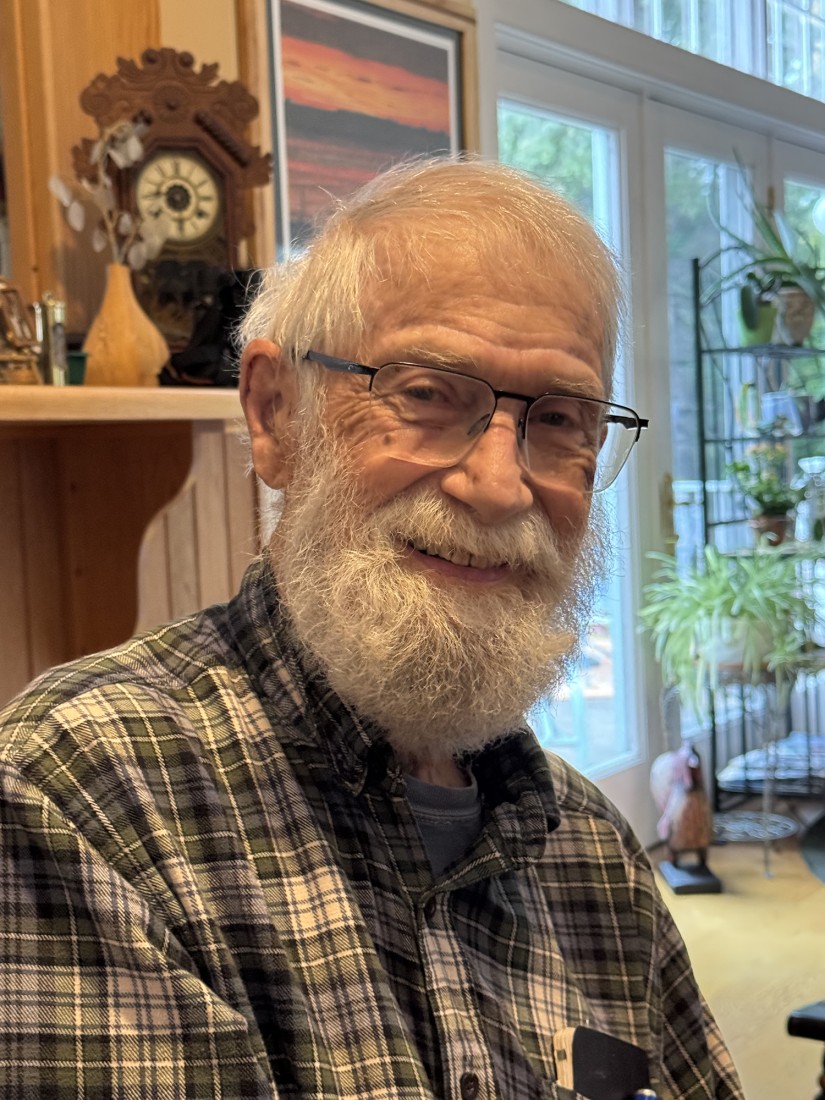
Dave Houston is a forester and pathologist who worked for the U.S. Forest Service for 36 years. With a master’s degree from Yale School of Forestry and a PhD from University of Wisconsin, Dave spent much of his career researching stress-triggered tree diseases in northern forests. Now retired, Dave enjoys spending time restoring wooden boats and designing walking trails.
I grew up all over the place around New England. My father managed dairies back in the Depression, so we moved from one spot to another. He would upgrade a dairy, getting it working, and then we’d go on to the next one. When I was in seventh grade we wound up back in Westborough, Massachusetts, where I was born, after moving ten times.
In high school, I was mostly interested in my wife-to-be, Jan, but I had a great time hiking and looking at forests. I lived on a farm, and we had a phenomenal cedar swamp, which became really fascinating to me. I spent a great deal of time there. It became rather important after a big tornado came through our town, and all of a sudden, parts of the town were wrecked. I wound up with a little contract with the town to cut cedar posts to put up temporary street signs.
I went to University of Massachusetts to study forestry. I had injured my knee playing high school football and getting that repaired put me back a little, so I needed to repeat some courses over the summer. But because of that, I got to work at the experimental forest at UMass that summer. It solidified my interest in forestry. I joined Alpha Gamma Rho, which is an agricultural fraternity at UMass, and got involved in managing the fraternity. I also would spend the first three weeks of my academic year picking apples. It was good money because I was a good picker, and apple growers were plentiful in the Amherst area. I got friends to take notes for me, and I’d make up the work. The professors were excellent and I had a great time there.
The summers of my junior and senior year, I got hired to scout for oak wilt disease, which was not yet in New England, but as far north as Pennsylvania and all the way west to the Lake States. The first year the project was managed by the Bureau of Plant Industry, and the second year the Forest Service took it over. There were not many rules the first year, and I was told to just take a pilot up and see how he flew, because we needed to do aerial surveys. For guidance, they said, “If you can poke your thumb through the skin of the plane, don’t take that plane.” They don’t do that nowadays! I got to see all over the Appalachians as far as Tennessee. After aerial surveys, I would go locate the trees on the ground and take samples from them to be analyzed back in the lab and see whether the oak wilt fungus was present.
After that I took a course in forest pathology with Dr. Walter Banfield. He was a bit snide about teaching foresters, so I thought, “I’m going to show him.” We used a textbook written by John Boyce, who was then a professor at Yale. I studied like hell, and as a consequence, I really knew that book. I got quite interested in pathology, and then I decided to go on and get my master’s at Yale under Boyce. I was there for a year, testing wood blocks against various decay fungi and also surveying Connecticut’s red pine plantations for a developing root disease. Boyce said, “Well, now you know all I know.” Someone at University of Wisconsin asked if he had any students who wanted to get a PhD, so he asked me. I said, “What’s a PhD?” I was pretty naïve, but he told me they were pretty darn good out there and if I wanted to go into forest pathology, this was a great opportunity.
By that time, I had married my wife whom I had met in the eighth grade. Jan was a nurse and doing her hospital training at Yale, and we decided to go to Wisconsin after we finished school. We loaded up a trailer I had built for my 1938 DeSoto and we drove out. I got stuck going around and around this traffic circle in Madison that had four or five lanes on it and had to pull over. It was right in front of the Methodist Hospital, and Jan said while I figured out where we were, she’d go in and see if she could get a job. Well, a half an hour later she came out and said she had been hired to be an instructor. She was a very good nurse, and that’s how she started her career teaching nursing.
I started my PhD work looking at oak wilt, a disease which was prevalent in Wisconsin, but about halfway through, a new problem with sugar maple appeared in the northern part of the state. No one knew what it was at the time. The research station wanted a pathologist with forestry training, and it was hard for them to find someone, so they asked me. It was a delight for me because sugar maple was my favorite species. I had a great time working on it, but it took me several more years. During that time, my two daughters were born.
The sugar maple problem was complex: it was initiated by an insect but followed by a pathogenic root fungus. Trees that had been altered by defoliation became susceptible to killing attacks by the fungus. I became interested in major stress events followed by a pathogen. After I finished my PhD in 1960, I started as an assistant professor but then funding ended after six months. The Forest Service was hiring back in New Haven, Connecticut, and I knew the people and thought it would be a place where I could bring my idea of stress-triggered diseases and start a program. We moved, and my son was born soon after we arrived. So, two of my kids were born in Madison, Wisconsin, and one in Madison, Connecticut. It was nice to come back so my folks and my wife’s folks could be a bigger part of our kids’ lives.
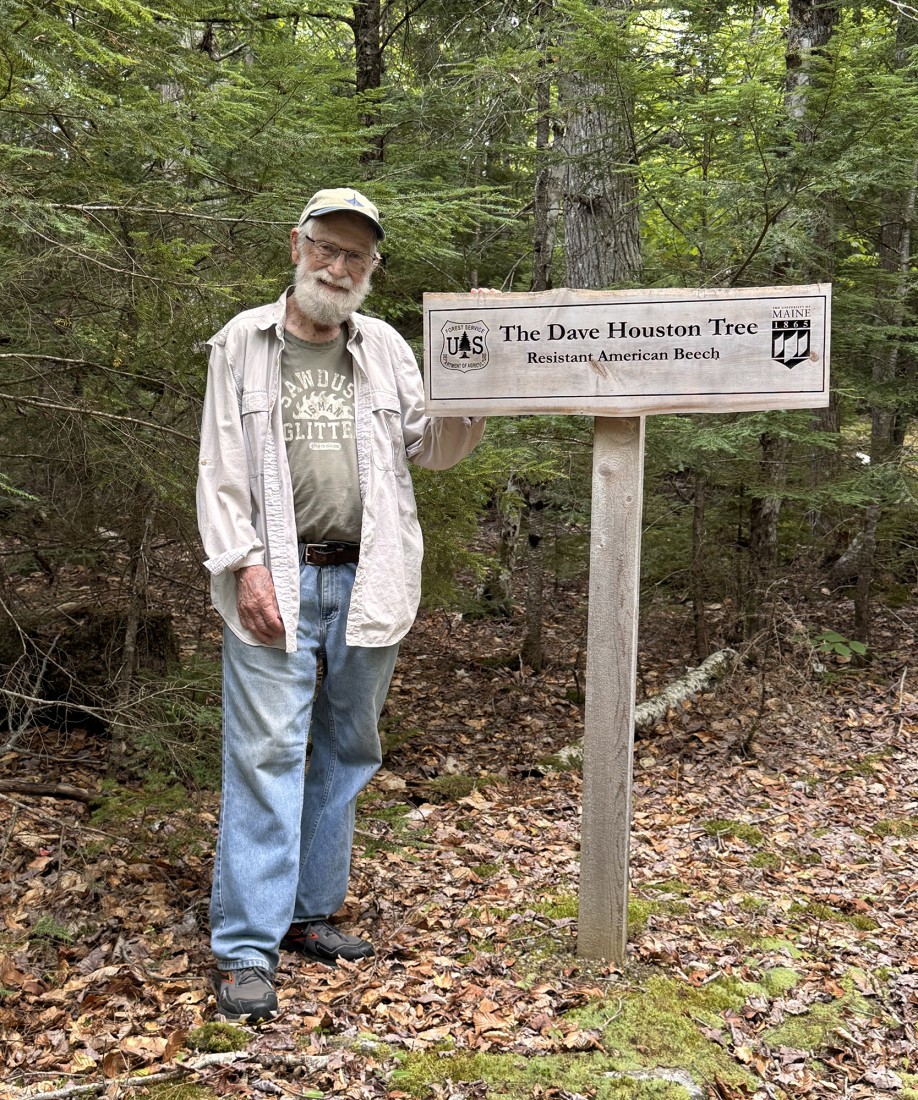
I wanted to study how environmental stress could make trees susceptible to other organisms, so I went to Washington, D.C. and gave a presentation on my proposal. It was fascinating to me because it was not just one thing to study, but a whole slew of things. The Forest Service gave me the go ahead, and so I put together the research program for that. I studied many different species and many different problems, but for me, one of the most interesting was my work on American beech and beech bark disease. Beech is very hard to season and requires a complicated kiln schedule, so as a consequence it’s not very desirable as a timber species. But it’s a really tough wood, so high heels, spools for thread, bowling pins, and other items were made with beech before plastic became a replacement. And beech seeds are very important for wildlife, so ecologically it’s significant.
I spent a year on sabbatical in England working on European beech and getting to know the problems with it. A sabbatical was not a typical thing in the Forest Service back then. I was the first. I had a lot of freedom, and there was a great young researcher who joined me there, David Lonsdale. We could study anything, so we discovered a heck of a lot. It was like being in a candy store. My family had a great time, and we all made dear friends there.
My brother was a forest geneticist, and we got to work together on a big project identifying the genetic characteristics of resistant beech. He was nine years younger and sadly has passed now, but it was great to do that work together. Normally, you can’t get a grant with your brother, but I said, “Find me another geneticist who can do what he can do.” And they couldn’t, so we got the grant! Oh, we had a great time. I had found resistant groups of beech from Prince Edward Island down to West Virginia. I took samples of the beech buds for him to analyze so we could compare the resistant versus non-resistant trees genetically. It was very interesting, and we determined that resistant trees differed from susceptible ones in some of their isozyme patterns. But it’s discouraging to see all these unique beeches succumbing to the new beech leaf disease now, after spending so many years working on beech bark disease.
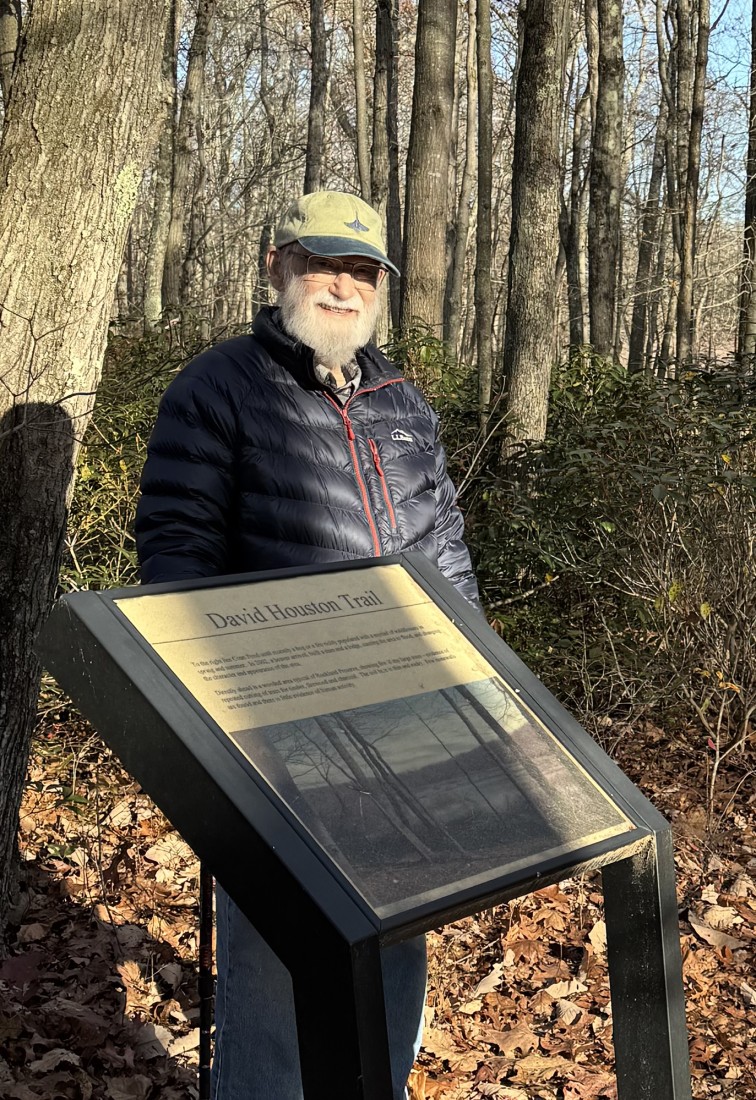
I retired in 1995, but I continued to work, as many scientists do. It’s hard to quit. I was with the Forest Service for 36 years, and continued on for another 5 or so, to work with students, finish papers, and that kind of thing. I got very involved in the Madison Land Trust and worked on developing their trail system. They named a trail after me and established teaching stations all along it; it was a trail that I had used to teach about the forests and what’s was happening there, so I thought that was pretty nice.
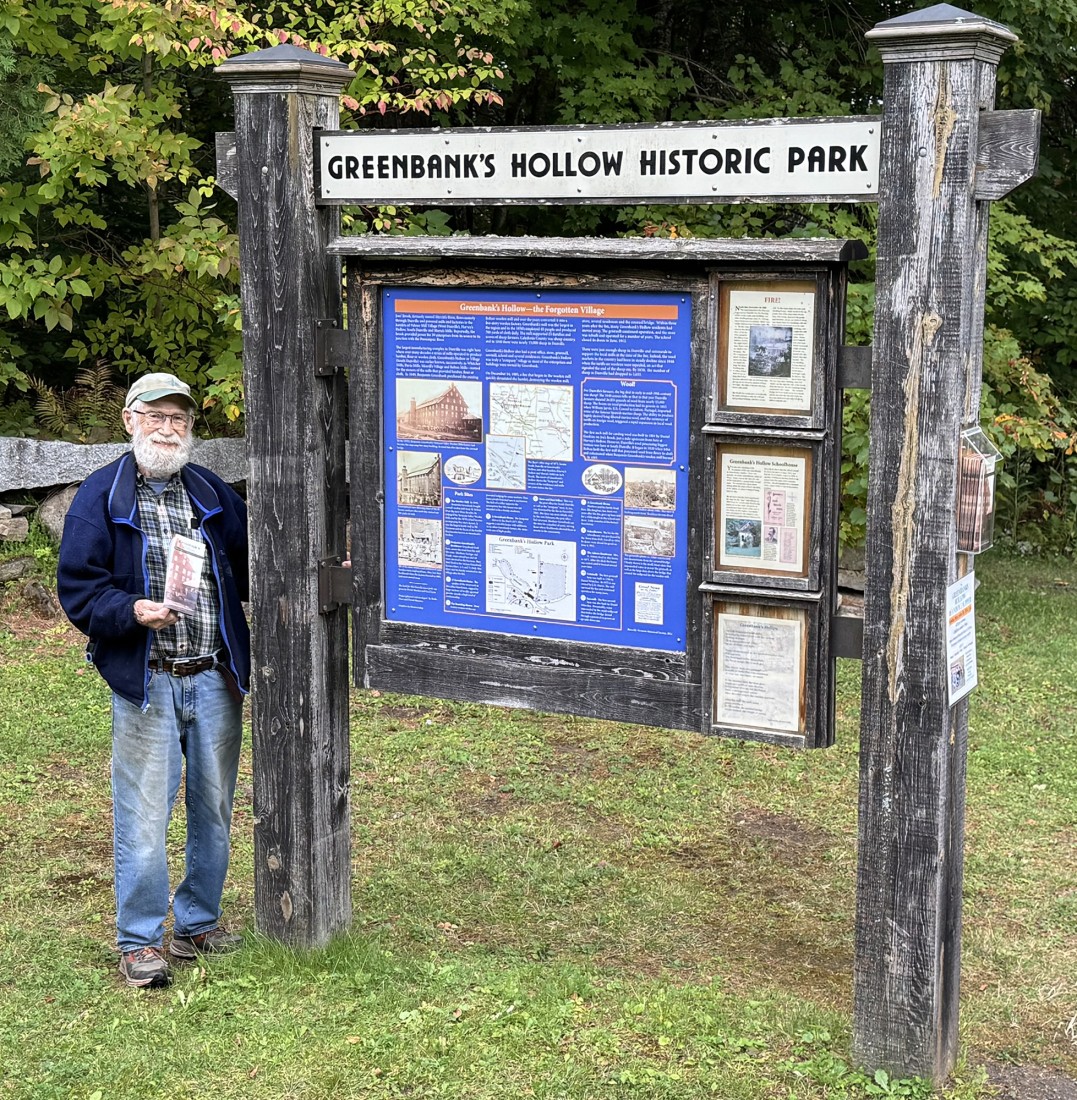
In 2001, Jan and I moved to northern Vermont to be closer to one of our daughters and her family. She lives in a town not far from where my father was born and was pretty settled. We bought land in 1989 with the plan to move up here. I got involved with forestry and historical societies. I got really involved with the Danville Historical Society after some land was given to them. The property is called Greenbank’s Hollow, and it has quite an interesting history; there was a big five-story woolen mill there that burned down in 1885. It was a big operation with 85 people working there, and all the houses around it belonged to the mill owner. So when it burned down, all of it was abandoned. Many of the town’s folks didn’t know about the history, because trees had grown up in and around the old cellar holes and obscured them. So we cleared all these cellar holes and dug into the history and created signs and developed trails. We keep a record of people coming and we get people from all over the world visiting the spot, which is really nice.
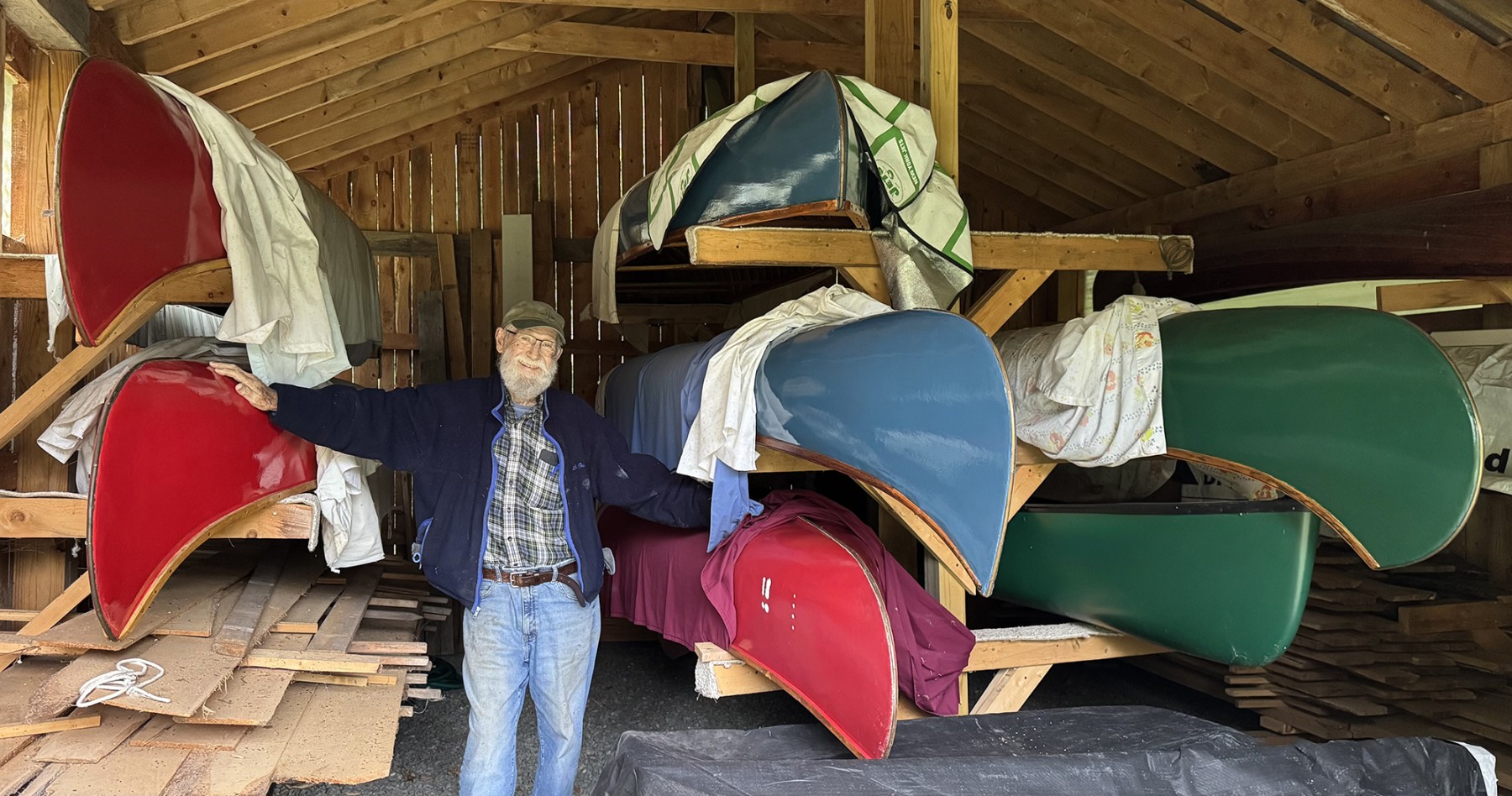
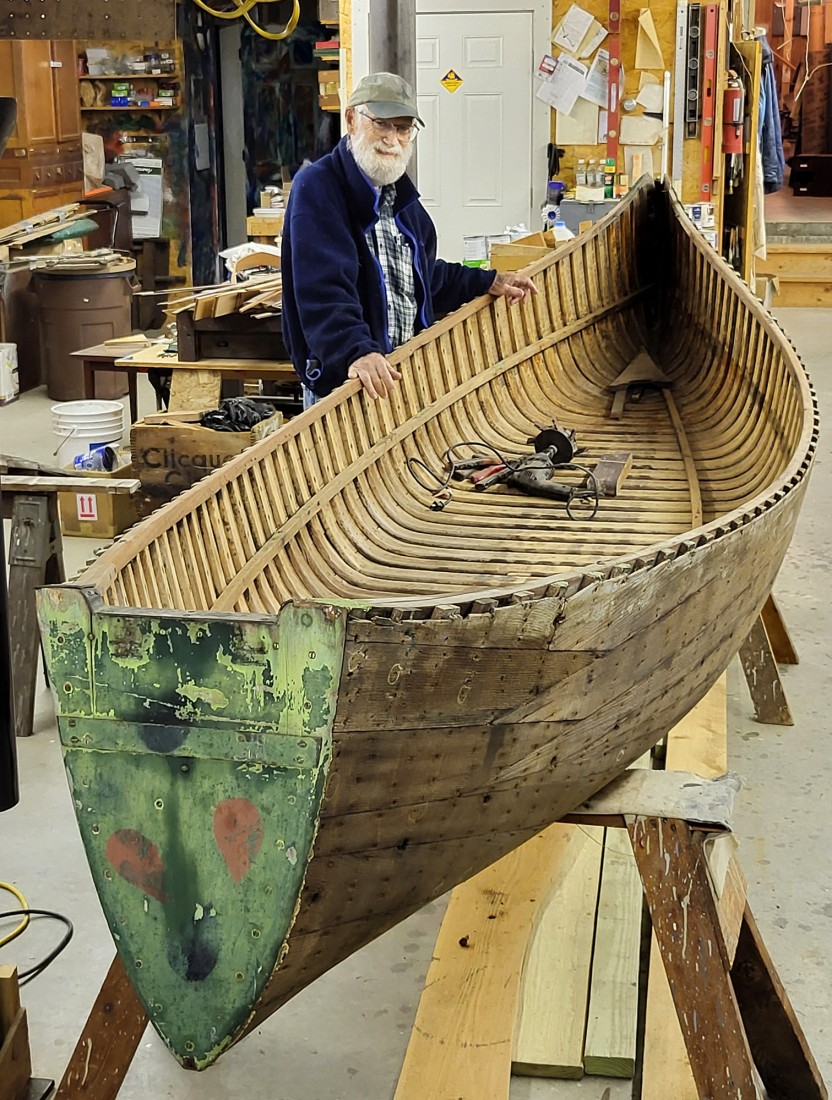
I also spend a lot of time restoring wooden boats, especially canoes. I’ve worked on them for many years, and I’m now working on my last one, which is built like a canoe, but with a square stern, from 1908; it needs a lot of work. I’ve restored at least 40, maybe closer to 50. People often just come and give me their old, neglected canoes, so I’ve built a barn to store the “keepers” in. Some of them are real unique and real beauties.
I enjoyed my whole career. You know, I can’t think of a time when I was really unhappy or just wasn’t having a great time. My career has been great, and I just love being in the woods. I’m getting old so I have to be careful now, but I still like to get out when I can. When I look at the woods behind my house, I think, “I’ve got to get in there, I want to be in there.” But I loved my work and I loved the people I worked with. Every adventure I had – and I had quite a lot of them – I thoroughly enjoyed. I had great people working for me, both in the Forest Service and some student assistants that I just adored. I mean, I got to work with the brightest and sharpest people. And even in my retirement, I have found more people that I just love. I have been really fortunate.